Nightmares End

“You stupid damn fool, why’d you shoot this customer?”

“I didn’t shoot this customer.  I plugged them ones over there.  I must have killed all three of them.  Look at the size of them holes.”

Nobody cares about “Advertisements”.  I think it looks good.  WordPress keeps trying to get me to start paying for this site.  I refuse because I shut this site down.  It’s got nothing to do with me.  I sent the fluffy white hounds on their way and not just because it wasn’t about them.  Tired of WordPress trying to get me to pay for something I have never paid for and will never pay for.  Who the hell do they think they’re trying to kid?

I like this “Refresh connection with Linkedin.”  I dumped “Linkedin” too, and, true to form, it’s not like anyone has noticed.  That’s not how we roll.

“Years ago you came here expecting miracles. That somehow it was going to work for you.  It didn’t.  Now you’re lost.”

But at least we’ll always have Facebook.

It’s all right.  It was always all right.  It’s okay.  It’s fine.  I’m getting up and walking out. Without even looking at the stupid thing he ripped it into small pieces and threw it in the trash where it belonged.

Moving on.  You know you’re having a bad dream when you’re moaning and screaming so loudly you wake yourself up.  And you feel bad because you’re not alone and you’ve disturbed the night.


Thinking again about C.P. Cavafy (1863 – 1933).  A beautiful and exciting poet.  To the heady memory of Antiochos the Great!  Cheers!

Cavafy’s exoticism, his references to ancient times and to his times.  A unique character.  Born in Alexandria, Egypt of Greek heritage.  Youngest of nine children.  Father had started an import-export business in Liverpool, England.  In 1870, when Cavafy was seven, his father died.  Within two years his mother had moved her family to Liverpool.

Cavafy spent seven years in England until the age of sixteen and learned to speak English fluently.  The influence of English literature and of English manners remained with him.

In 1882 Cavafy moved from Alexandria to Constantinople, modern Istanbul, with his mother and remained there three years before returning to Alexandria.  This sojourn also impacted his artistic sensibilities.  He wrote his first poems in English, French and Greek.

At the age of 29, back in Alexandria and still living with his mother, he  became a government clerk.  He stayed with the firm for thirty years, retiring with the rank of “Assistant Director”.  Cavafy also earned money as a broker on the Egyptian Stock Exchange.

Cavafy stayed with his mother until her death in 1899 then lived with his unmarried brothers and then lived alone for most of the rest of his life.  C.P. Cavafy was a gay man. His one intimate, long-standing friendship was with Alexander Singopoulos who became his heir and literary executor.

It’s certainly that exoticism that drew me to Cavafy, and his brilliant, straightforward, colloquial style.  The standard English translation of Cavafy’s poems is by Edmund Keeley and Philip Sherwood and was first published in 1975 by the Hogarth Press.  The translators don’t attempt to imitate Cavafy’s use of rhyme schemes in his original modern Greek.
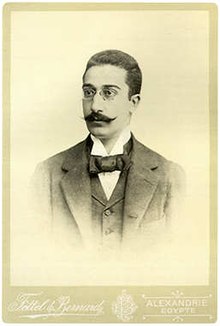
C.P. Cavafy circa 1900

Cavafy never offered for sale a volume of his poems in his lifetime, preferring to pass around privately published pamphlets of his works among his friends and relatives.  One writer has described his “uncommon esthetic acetiscism”.  That appealed to me too.

Cavafy wasn’t entirely unknown to the wider public. He had a twenty year acquaintanceship with E.M. Forster who introduced his work to English speaking audiences.

In 1926, living in Alexandria, he received the Order of the Phoenix and in 1930 was named to the International Committee for the Rupert Brooke memorial statue placed on the island of Skyros.


A Prince From Western Libya

Aristomenis, son of Menelaos,
the Prince from Western Libya
was generally liked in Alexandria
during the ten days he spent there.
In keeping with his name, his dress was also suitably Greek.
He received honours gladly,
but he didn’t solicit them; he was unassuming.
He bought Greek books,
especially history and philosophy.
Above all he was a man of few words.
It got around that he must be a profound thinker,
and men like that naturally don’t speak very much.

He wasn’t a profound thinker or anything at all–
just a piddling, laughable man.
He assumed a Greek name, dressed like the Greeks,
learned to behave more or less like a Greek;
and all the time he was terrified he’d spoil
his reasonably good image
by coming out with barbaric howlers in Greek
and the Alexandrians, in their usual way,
would start to make fun of him, vile people that they are.

This was why he limited himself to a few words,
terribly careful of his syntax and pronunciation;
and he was driven almost out of his mind, having
so much talk bottled up inside him.

 

Scarborough Fair

“The troop was at Quan Loi, northwest of Saigon, in 1969.
The terrain was different from the Hiep Duc-Que Son Valley area.  The war was different now.  Here were dense, lowland jungles, occasionally broken by the straight rows of rubber plantations.  The most dangerous assignment in the troop was now the Scouts.  They cruised along at treetop level, looking for targets and being targets.

Mr. Murray was a slightly built scout pilot with a thin mustache and the kind of swagger I have since seen only among the Irish street kids of Boston.  He was damned good and he knew it.

He was the only scout pilot that the Blue Platoon ever got close to.  We were often sent out to bring back the bodies of the Scouts, and didn’t particularly want to know them first.  But Mr. Murray was different.  He survived.  He was a special pilot that every scout gunner wanted to fly with, because he was the lucky one that would bring them home after each mission.

As time went by, other scout pilots would last a day or a week or a month, but Mr. Murray kept flying.  The Blues began to regard him as a good-luck charm and, the rarest of things, began to talk to him.  He was different—a philosopher who thought about history and astronomy and the reasons that things had to be the way they were.  We could talk to him about any subject and he would listen and give us an answer.  The officer-enlisted man gap suddenly didn’t exist.  I still remember his favorite song, “Scarborough Fair.”


“Doc told me that some of the old Blues had gone home, and others had been hit in an ambush on May thirty-first.  The Blues had made landings around Khe San in March, but most of the NVA had fled before the Cav arrived.  The troop had also been the first Americans into the Lang Vei Special Forces Camp, which had been overrun by NVA tanks in February.  Doc said that Khe San had looked like a huge garbage dump after the siege, filled with trash and demoralized, shell-shocked Marines.  He said the way you could spot the newly arrived cavalrymen at Khe San was the way they behaved during rocket attacks.  The cavalrymen would wait for the black explosions and take pictures.  The Marines would dive for the nearest foxhole or ditch.”


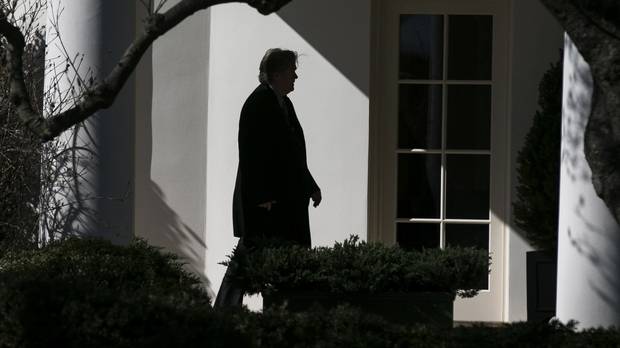
President Bannon Heads Out For Burgers

“The scouts were enjoying “good hunting.”  The Communist divisions were massing southwest of Saigon for another Tet offensive, but this time the big bombers would crush them before they left their jungle camps.  One morning a scout chopper surprised a long column of NVA coming out of the jungle, walking along a streambed , and re-entering the jungle further ahead.  The LOH hovered over the streambed and the gunner shot a number of NVA, he wasn’t sure how many.  Then the little chopper landed while the gunner loaded aboard a 57mm recoilless rifle, a .30 caliber machine gun, and some rifles.

They were put on display at Quan Loi.  I was looking at the  weapons when Bolten walked up.  It was the first time I had seen him at close range in twelve months, and he looked ten years older.

He looked fondly at the trophies.  “Aren’t they something, Sarge?”

“Yeah.  Did you have anything to do with getting them?”

“Of course.  The gooks never knew what hit them.”  He had made the proper impression, so he turned to leave.

“Bolten?  Can I talk to you a minute?”

He looked like a caged cat.  “Why?”

“You’ve been here a long time.  You know, the first time I ever saw you was the day you killed that tax collector near Bong Son.”

“I remember.  He was my first gook.  The lieutenant kept the money for the squadron orphanage, right?”

“Right.  I know it’s none of my business, but what I was wondering is, are you ever going home?”

I got a quick answer.  “No!  The Cav’s my home.  I don’t want to leave.”

Photo Globe&Mail.  Quotations Matthew Brennan.  “Headhunters” and “Brennan’s War”

Now stop all this foolishness and get some rest


Violets In The Sun

It doesn’t matter where you are.  A statement, it must be admitted, that is open to interpretation. It’s tough when you don’t know what “interpretation” even means.  A Quebecer who can speak French?  Quebecois?  La Langue Francais?  Quebecois?  So let’s leave it.

There’s also no longer any reason for it.  I wish I knew myself.  Sometimes it’s about Jasmine flowers.  Sometimes, very rarely, violets.

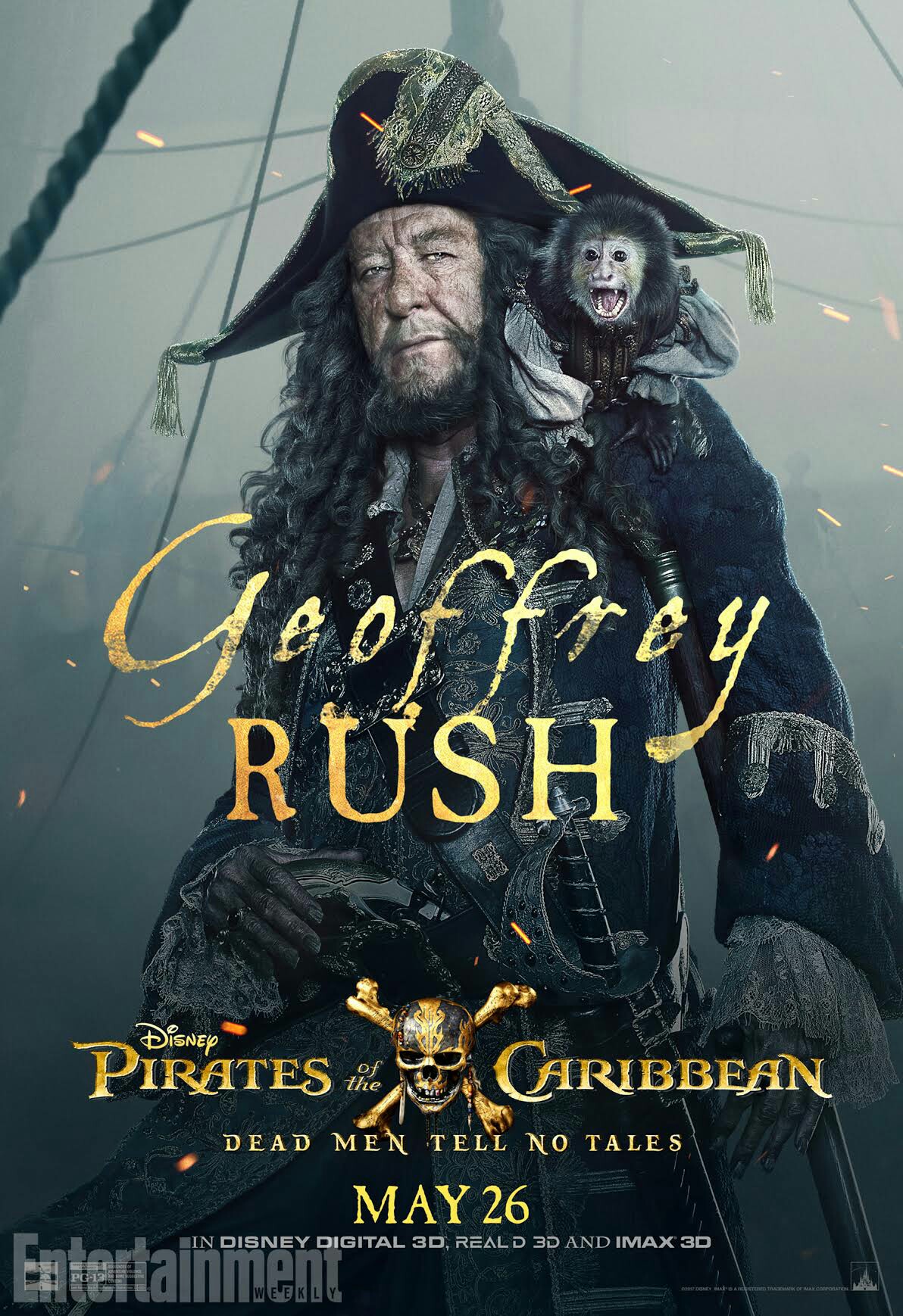
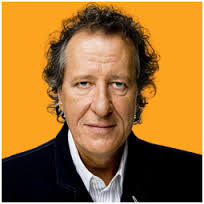
Violets in this continuing warm, dry summer.  There’s a controversy brewing in England now about Mr Bernard Hepton and Mr Geoffrey Rush.

They bear a striking resemblance.  And the problem with the site now is it’s been tasked with sorting this out.  Who is who?  And who are we to believe?


Bernard Hepton
Geoffrey Rush


I was in Manhattan longer ago than I like to admit.  I love Manhattan.  Freedom reigns and all the old saws about America are working for you.  They’re selling saws in the street and it’s for America and you could still buy a pack of Camels for 90 cents.  You can’t give Camels away these days.

But migrating towards the grasslands and abandoned supermarkets in that stretch that used to be there this side of the village, going down and down into Lower Manhattan with a white cab driver, semi-long hair, cooperative, but you brandish your pistol anyway because you’re back in the States and aren’t sure if he’s okay with this trip, and of course he is, but good on you for checking, and he actually appreciated the gesture, in his New York way, and it’s forward to the village and Washington Square, which, by the way, they’re gonna rename now because the name”George Washington” has become hateful to Americans.

It’s early but if any of our audience can explain why Bernard Hepton, a distinguished British actor, as they used to say, and still do, he was great in “Tinker Tailor Soldier Spy” and many, many other performances, greatly resembles Geoffrey Rush of “The King’s English” and subsequent triumphs, please come forward now.  Because something is going on.

And now, reasonably recently, Mr Geoffrey Rush is making his way even onto City of Vancouver transit stops via large, full frame posters— “Pirates of The Caribbean Dead Men Tell No Tales”— an image I was dumbfounded by the first time I saw it, and I nearly passed out stumbling onto the “15 Cambie” bus by the “Liquor Depot” and bank there, heading south to get my freedom.  The whole experience made for dizzy work and I hate that.

I couldn’t believe that was Rush.  I didn’t even know the man was in the pirate franchise. What else didn’t I know?  Gnn…  And at the same time, as I started thinking about it, I couldn’t believe how these gentlemen, Rush and Hepton, Hepton and Rush, together in their separateness, seem rather to blend together.  It’s a mystery.

Geoffrey Rush


Bernard Hepton


At some point it’s going to matter.  We’ll make it matter.  Because this is serious. You’ll never get any sort of explanation in England, not really.  In private, yes, maybe at the right clubs, but this strange coincidence, if that’s what it is, but I doubt it, has never really gelled with Britishers because, it could be, Mr. Rush is Australian, and nobody bloody cares about Australia, but of course good luck to him. And Mr. Rush is as English as Dover cream.  There’s nothing else in it.  Have a beautiful day.

Violets image courtesy CSN