The General

“A 336,000 word memoir written in one year. By the time I’m done the cancerous growth on the side of my neck is the size of a baseball. And baseball hasn’t even been invented yet. I die. But my beloved bride Julia and my family are well provided for. I was flat broke. I was busted out by a swindler and it didn’t matter that I’d just spent eight years as president of the United States. Or that as top general of the army I’d won the war for the union. I was toast. Finished.

I was decisively brilliant in some areas of my brain and fantastically naïve as to certain conniving individuals in another. It happened more than once. My brain was divided into two halves like everybody else’s. So it’s complicated.

A guy named Mark Twain thought I should write my memoirs to restore my finances and him and Webster published the book and it’s still in print 135 years later. My widow, who outlived me by seventeen years, holding the copyright, realized $650,000 in U.S. dollars and the family’s fortunes were restored. Not every memoirist can say that.”

Graduated West Point 1843 at twenty-one. Fine horseman. Served in Mexico and at Fort Vancouver, Oregon Territory. Resigned the army 1854. Hardscrabble existence. Returned to the army 1861. Reduced Fort Donelson, Vicksburg, Shiloh, Chattanooga, Appomattox. Never lost a battle. Made general of the army, the first to hold that rank since George Washington. While I was reading the book I couldn’t stop myself from wondering who was George Washington? I love history so that was my problem to solve, not somebody else’s. Grant kind of reminded me of myself.

Ron Chernow. Never heard of him until his big bio of the general. And I’ve hungered for the general since I read his memoirs about a hundred years ago. Grant was also a literary marksman of the first order. Luv big books. I remember my Daddy telling me just before he packed it, “If it’s the right book you often wish it was longer.” I hated my Daddy but that don’t mean he was wrong.

Chernow’s a good read. Ulys had a problem with booze and the author is about the first to really bring that forward. Other biographers have alluded to it slightly and some have ignored it altogether. The problem as with all problem boozers is that he became a totally different person when gooned and drank to the point of insensibility exclusively. A long serving adjutant and his wife greatly influenced his staying away from alcohol, doing their part to save the union.

America hasn’t changed much. Then as now it was a glowing fireball of rabid partisanship except in Grant’s time the mad, drooling partisanship came from the Democrat side while the Republican party was the voice of reason, compromise and unity. The south was Democrat and still thought slavery was cool even after losing the war. A lot of bad actors wanted to overcome that result, sowing terror and murdering black people. Grant spent a lot of time as president using federal troops to round up and prosecute the Klan because the states down there couldn’t or wouldn’t do it.

Ron Chernow has a thing for biographies of major American figures. He’s covered off George W. and Alexander Hamilton. The hugely successful play “Hamilton”, at least it was before the pathogen showed up, was largely based on his biography. Movie rights to “Grant” have been sold. The book is good, all 958 pages of it plus notes.

Find if you can the deluxe edition with the stars in Grant’s eyes to match the ones on his shoulder bars. Don’t bother. I put those stars there myself because I didn’t want Grant’s eyes following me around the room and giving me the creeps every time I put the tome down. If you’ve got any gold stars lying around you can do the same.


In these interesting times don’t forget your prayers…

Thou shall not be afraid for any terror by night
Nor for the arrow that flieth by day
For the pestilence that walketh in darkness
Nor for the sickness that destroyeth in the noon-day
A thousand shall fall beside thee
And ten thousand at they right hand
But it shall not come nigh thee


Excerpt Psalm 91 Church of England Book of Common Prayer

Slightly different version in the King James version of the good book

Peace
Down In The Highlands

“A bedraggled paratrooper came stumbling out of the trees at the far side of the clearing. The man had been wounded in the previous days action but had evaded the NVA. As a medic treated his wounds Bodine asked him where the rest of Bravo was.

“Just a little way down the trail,” the youngster said in a quivering voice.

Bodine took his platoon forward. A short distance beyond the clump of trees he spotted the mass of bodies. Bodine, ignoring the carnage, moved beyond the site and set up a protective line. Then he radioed to Captain Leonard to come forward.

A few minutes later, Captain Leonard brought the rest of the company down.

No one could comprehend the horrible scene. Dozens upon dozens of American bodies laid sprawled in death’s grotesque grip. A heavy veil of black flies swarmed over the swollen corpses and the thick pools of blood and gore. The smell of death hung so heavily in the jungle that many of Charlie’s paratroopers were unable to control their stomachs. They staggered behind trees to vomit.

It was immediately apparent to Lieutenant Harrison that many of Alpha’s men had been executed; a large number of their bodies bore ghastly exit wounds in their faces. Other corpses had been mutilated, their features destroyed, rings fingers cut off, and ears removed.

The scene was almost too much for Harrison to handle. He’d never expected to encounter something like this on his third day in the field. He couldn’t deal with it on a human scale. His mind and body began functioning solely on their five years of extensive military training. Oblivious to the carnage, Harrison started searching for his classmates, Judd and Hood. He found their bodies within minutes.

Helicopters brought in stacks of body bags. Charlie Company’s grunts began the gruesome task of filling the rubberized green canvas bags with the remains of their comrades.

Three members of Alpha’s decimated platoon had survived the slaughter. One was the man Specialist Patterson had witnessed changing his M60 barrel with his bare hands. Another man had been shot three times in the back but survived. Lieutenant Harrison found a man who, while he played dead, had had his ring finger cut off by a machete-wielding NVA. After the NVA left the battlefield, the man in his delirium, tried to reattach the severed digit to its stump with the tape that wraps around a smoke grenade’s cardboard canister. Then he stuck his injured hand in an abandoned canteen cover.

Bravo company finally arrived at the site at about 1500. They immediately pitched in to finish policing up the ground. Within minutes of his arrival, Lieutenant McDevitt heard the news about his friend Don Judd. It didn’t seem possible; just two weeks earlier they’d been making plans for R and R. How could Judd be dead?

Back at Dak To, Captain Milton began the grim task of positively identifying the dead. The NVA had been known to switch dog tags on American corpses, causing untold agony for family members when the deception was uncovered. Assisted by 1st Sergeant Deeb and Sergeant Nichols, who knew the members of 2nd platoon, Milton spent the next two days positively identifying his men.

The final toll for Alpha Company was shocking. Out of 137 men in Alpha on 22 June, 1967, 76 were killed. Another 23 were wounded. Of the dead 43 suffered fatal, close range head wounds.

Captain Grosso, the brigade surgeon, signed all the death certificates. Those for the executed Sky Soldiers listed the cause of death as “fragmentations wounds to the head.” A few weeks after the incident Grosso was given a statement, prepared by an unknown source at brigade headquarters, which confirmed the executions. However, Grosso never read it. He was so disgusted by the brutal realities of war he simply scrawled his signature on the document.

On 0845 on November 15 the NVA dumped a dozen mortar rounds on the airstrip. This time they were much luckier. Three C-130s received direct hits. One was slightly damaged but the other two erupted in huge balls of flame. The nearly full fuel tanks on the two transports burned furiously for hours, the intense heat driving off several attempts to douse the fire. Finally somebody decided to just let them burn.

Just across from him, not more than ten feet away, Sergeant Sandstrom writhed in agony. Both his legs were gone. Next to him lay the mangled corpse of a paratrooper. A third man had been blown about ten feet away. One of his legs was gone.

Mescan crawled on all fours to Sandstrom. While he applied tourniquets to the torn stumps, Sandstrom grabbed his arm. Between gasps he asked, “Will I walk? Will I walk?”
“Sure,” Mescan lied.

Dak To: America’s Sky Soldiers in South Vietnam’s Central Highlands
Edward S. Murphy. 1988.


Men in War Series   Why do they do it?  Because they love it.  Let’s take a break.

It’s coffee time.

Beach Avenue

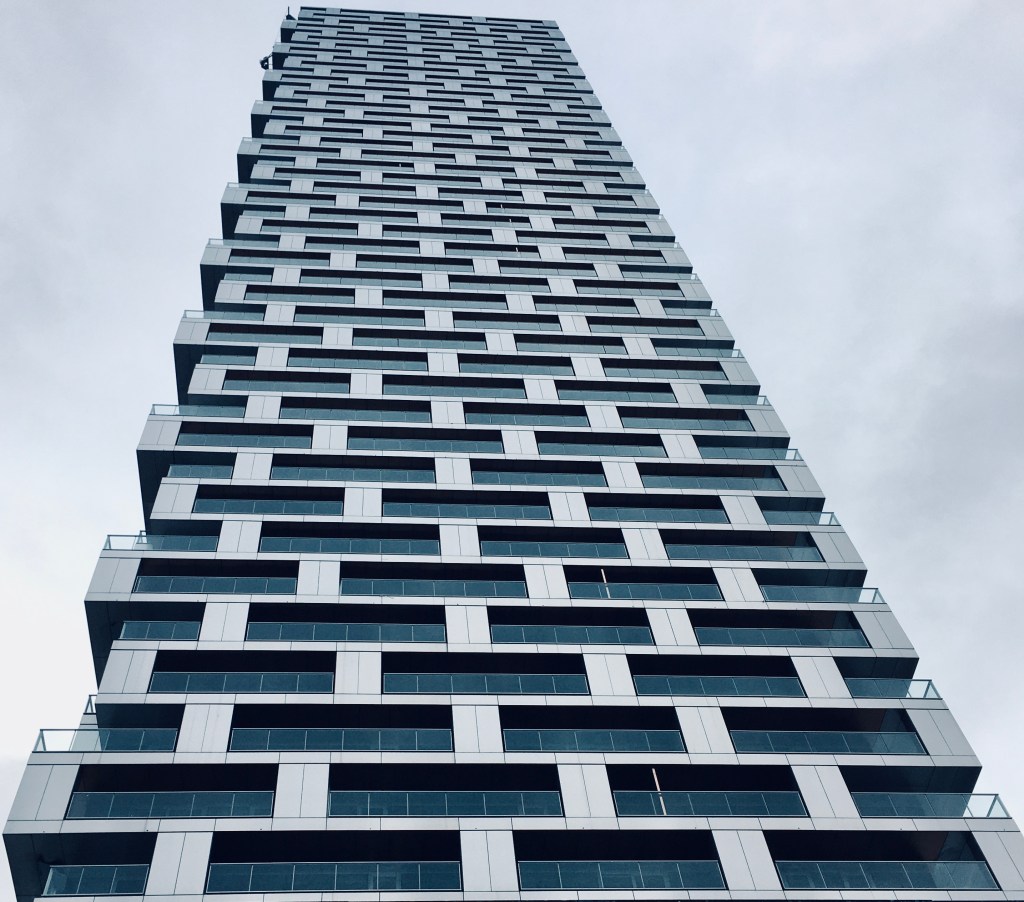
I didn’t realize until I saw for myself. They put a monster building on the site of the old Black Top taxi lot and disappeared the “Beach Cafe” coffee shop at 701 Beach Avenue. The coffee shop was in the old style with round stools with red vinyl padded seats at a counter and a few booths where generations of hard-driving cab drivers tried to drink enough coffee to obliterate the miserableness of their lousy cab driver existences.  

The walls of the coffee shop were adorned with a few old, framed black & whites of extinct Black Top cabs and their extinct drivers.  The taxi offices, such as they were, were connected to the cafe.  The shift dispatcher, the formidable and indomitable Ella Read, took and made calls from an office the size of a closet.  She sat in there all day working the phone and smoking cigarettes.  When I didn’t have a steady car, that is the same car with the same number for the same shift five days a week, I worked “spare”, as it was called.  

The call would come from Ella in the early afternoon asking if I wanted a car for tonight.  If she was calling and I hadn’t already worked five days that week as a spare it was a good idea to say, “Yes” or Ella would come through the phone line and bight me.  I think, though, that inside her hard exterior was a soft interior.

She’d give me the car number and I’d come down to the lot at the appropriate time, pick up the keys in the driver’s room with the sheet, being the legal-sized “trip sheet” with the carbon copy where you were supposed to record every “trip” involving a paying customer or customers and the time and the pick-up and drop-off location, and then I’d head out to the lot to find the car.  Sometimes it was on the lot, sometimes it was parked on the street somewhere near the lot and sometimes there was no car because the day driver had a longer last trip than he’d planned on.  If he was more than a few minutes late he’d give me a couple of bucks to make up for it.  I remember only two lady cab drivers. 

IMG_6068

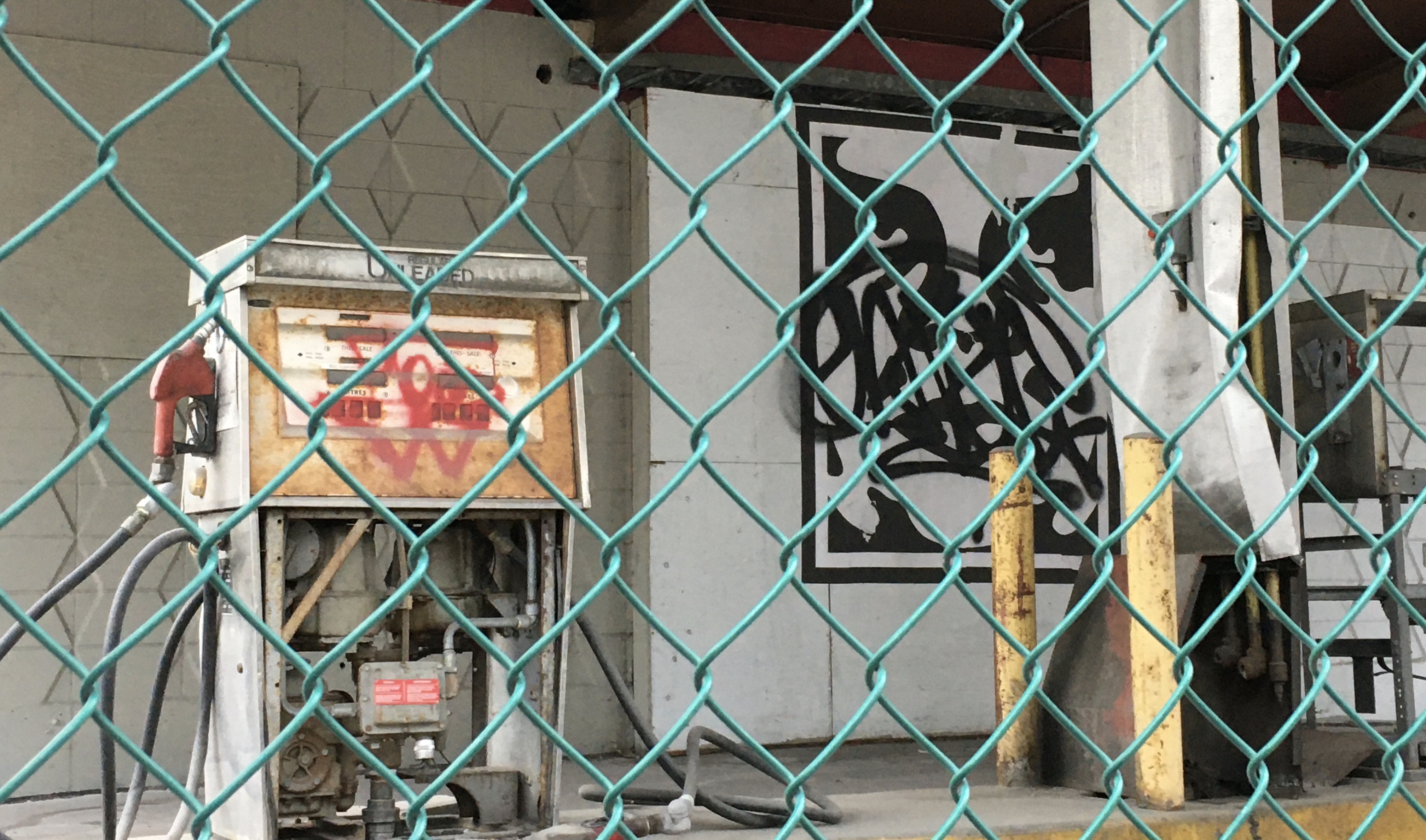
The gas station next door at 711 Beach Avenue is history too although the shell is still there with the old pumps. The fleet used to be all gas powered then it went to natural gas. It was common on the afternoon shift which was 3:45 p.m. to 2:45 a.m. to drive two or three hundred miles and go through at least two full tanks of gas.  

If I got low on gas and was far from the lot gas station I bought gas at a gas station and put the receipt in the cash envelope at the end of the shift, deducting the amount of that gas as well as the gas from the lot pumps from the car owner’s take for the night.  The split was 50 – 50 after that between the owner and the driver with two per-cent deducted from the driver’s share and held back for income tax.  

Unless a trip was dispatched it didn’t necessarily have to go on the trip sheet.  This was when you picked up a “flag” fare, somebody waving at you to pick them up if there was nobody but you in the cab.  It was a hard-scrabble hustle business and if you were getting lots of flags on a busy night you wouldn’t record them all and the cash was yours. Everybody did that within reason.  It was a cash business.  Only a fool of a cab driver would ever accept a cheque for a trip.  There were credit cards, and taxi vouchers and company accounts, but no debit cards.

Few gas stations at the time also dispensed natural gas so if the cab ran low it could still be switched to run on gas.  When I was out of natural gas and had a trip downtown I could make it into the lot to re-fill on natural gas.  Driving a cab for ten or eleven hours wasn’t necessarily a gas.  

On the afternoon shift I didn’t have to stay out until 2:45 a.m.  I could park the car around 2 a.m. especially if the night was slow.  Graveyard shifts were 6 p.m. to 6 a.m. with the expectation that the cab would be in service the entire 12 hours.  Some drivers only worked graveyard, some only worked day shift.  In my career I worked all three shifts, most of them afternoon but occasionally I’d opt for the thrills, chills and spills of graveyard.  Cool. Graveyard.

IMG_6067

This sign wasn’t in place during my career.  It’s at the northwest corner of the taxi gas station.  The chain link is new too, much newer than the sign.  That pole has to go.

IMG_6069

Then there’s this thing.  It’s hanging above Beach Avenue from the underside of a section of the famed Granville Street bridge just past what would have been the eastern end of the Black Top cab lot.  The cab lot and the high, vaulting, dun grey concrete of the bridge support arches towering directly above what at one time had been the False Creek terminus of downtown Granville Street before the bridge was built wasn’t much to look at unless you loved driving cab and lots of dun grey concrete. 

I called cab driving the worst job in the world.  I was never robbed or threatened by anyone and only ever physically removed a customer for being drunk and disorderly once. I doubt that it was the worst job in the world, then or now, but the pay was lousy considering all the hours in a shift and wouldn’t be great today either.  But it was better than nothing which is what I was looking at otherwise, at the time.  Today all the Black Top cabs still have black roofs and yellow bodies but the drivers now, who used to be all white, are all brown.  And I doubt very many of them can afford to live in Vancouver where they do most of their driving. These chandelier things and just about everything else in town costs more than it used to.