3000

I can’t believe it.  It’s 3000.  My favourite number.  Three thousand hours.  3000!  What a night this is turning out to be.  The “shift” that completes my three thousandth hour.  Can you write that 3000sandth?  If you can get that straight there’s probably a lot of things to celebrate.

I’ve noticed how I’m almost one of the old guard now.  Looked upon as such.  That’s time chewing things up.  I noticed, for the umpteenth time now, as I was coming in, that everybody knows me here and I wonder every time, why is that?  How could it be?  It’s because of the umpteenth time.  And it’s me.  Coming in.  Thanks for coming in.

It was a “Who is this guy?” moment.  Some hick was being incredibly rude to everybody.  You didn’t know if he was some kind of forgery, or what.  Incredibly stupid, rude and ignorant.  A 60 or so year old white guy in bad clothes wearing a stupid hat.  Lean, lined face.  Black eyes.  The devil himself.

You’ve been reading the mail.  At least that’s what it feels like.  You see stuff like this, but it can happen anywhere.  You understand that because you’re mature.  You’ve been around and seen a lot.  It doesn’t make any difference.

“That would never happen” was a key moment.  It wasn’t necessarily the intention but it was the result.   It was the truth.  He looked at me, I looked at him, and we knew it.  And I walked out of the office.  “Check the file.  I’m doing a good job here.”  I don’t think anyone had called him before.  I hope I helped you with your process today.

So it’s 3000.  It’s just a number.  It’s a nice, round number.  You do what you have to because it’s an expensive town.  I hope.

It’s been a busy July and we hope you’ll stay tuned.  Get some D-rays and stay hydrated.  There’s some really important stuff coming up but I can’t remember what it is right now.

samoyeddogs would like to welcome Rosemarie Daviduk to the program.

IMAG0387


Gun Crazy

The security guard was upset. And so he should have been. An armed guard had been shot four times that morning in Toronto. He’d survived and was in hospital. The security guard heard about it on his break and when I got back from lunch asked if I could bring the story up on my phone at my next break.  I did that before the break, and passed him the phone.  After reading the story, when we had a moment, he said, “That’s the company I used to work for.”

I knew what he meant because there’s a lot of companies I used to work for.  But I never worked for one where you carry a deadly weapon and also someone might try to use one on you.  I never did that, so I’m always interested in people who have.  Why not?

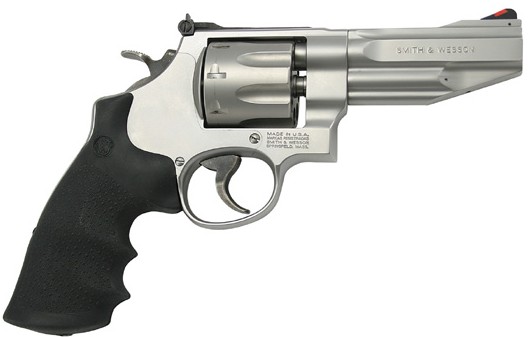
We chatted a bit in another brief conversation a bit later that afternoon.  It was up near the high-end Napa Valley stuff.  Good stuff.  The guard talked about working for that company and told me a short story about being on the firing range, practising with the standard issue Smith & Wesson .38 revolver.

He’d forgot his speed loader and the boss was ticked because it was supposed to be part of the training session.  How to get more rounds into the weapon speedily.  Before they kill you.  I looked it up later.  I was getting an idea of what it’s like to do that, to “pack” or “carry” a gun, all those clichés.  It’s not always really well paid and can be mostly routine and very ordinary and job-like and not always really well respected.  Until the day comes when somebody starts shooting at you.

Smith & Wesson .38It’s a serious subject.  ‘We know the power of the gun.  We wear the scars of the violence.’

‘Gun Crazy’ is a very good film.  It’s older than me.  I remember right here and now, right off the top of my head, ‘I just like guns.’  Good old B&W feature.

There’s been gun violence in my neighbourhood, and probably in yours.  Maybe not.  The people doing the shooting don’t think about it as ‘gun violence’.  It’s strange to hear from someone in the same work situation as you that he used to work for a company where people get shot.  I never did that.  It needs repeating.

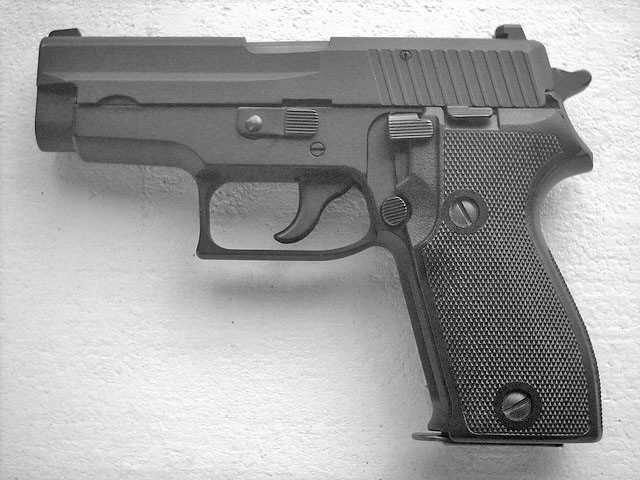
I’m reminded, I don’t know why, of the police constable from right around here in our town, who lost his gun.  VPD. I can’t remember if he got it back or what, but it was one of these.  I found it for him.  I’ve had it on file it for awhile.  The much traveled Sig Sauer P225.

Sig Saier P225

I was also reminded, in the midst of all this gun craziness, of a TV news item already quite a few years ago but I’ve never forgot it, of a police arrest of a youth, a young man out in Surrey, who didn’t look like he was more than 12.  He had a loaded nickel plated .45 pistol on his young person.  I remember thinking, ‘What the heck is it with that?’  I looked up ‘nickel plated’ later.

Almost immediately there were stories about the Toronto heist fail and the goofy, deadly goons including courtroom sketches.  Three young men.  Not old enough to drink or vote and, apparently, the second time they tried.  Well get on with it lads!  Why not?

So it’s come to this. The end of the post about guns.  They’re beautiful, really.  They’ve got style and sophistication.  They carry some weight and that feels good in your hand.  I’ve experienced that part.

All right hold it down.  I know, I know.  You need to see what a nickel plated .45 looks like.  Especially after all this.

350px-NickelPlatedM1911A1The kid.  The child.  With this beautiful weapon under his little plaid shirt. Sheesh-ya!  Stay in touch!

less later…

 Boundary Pass


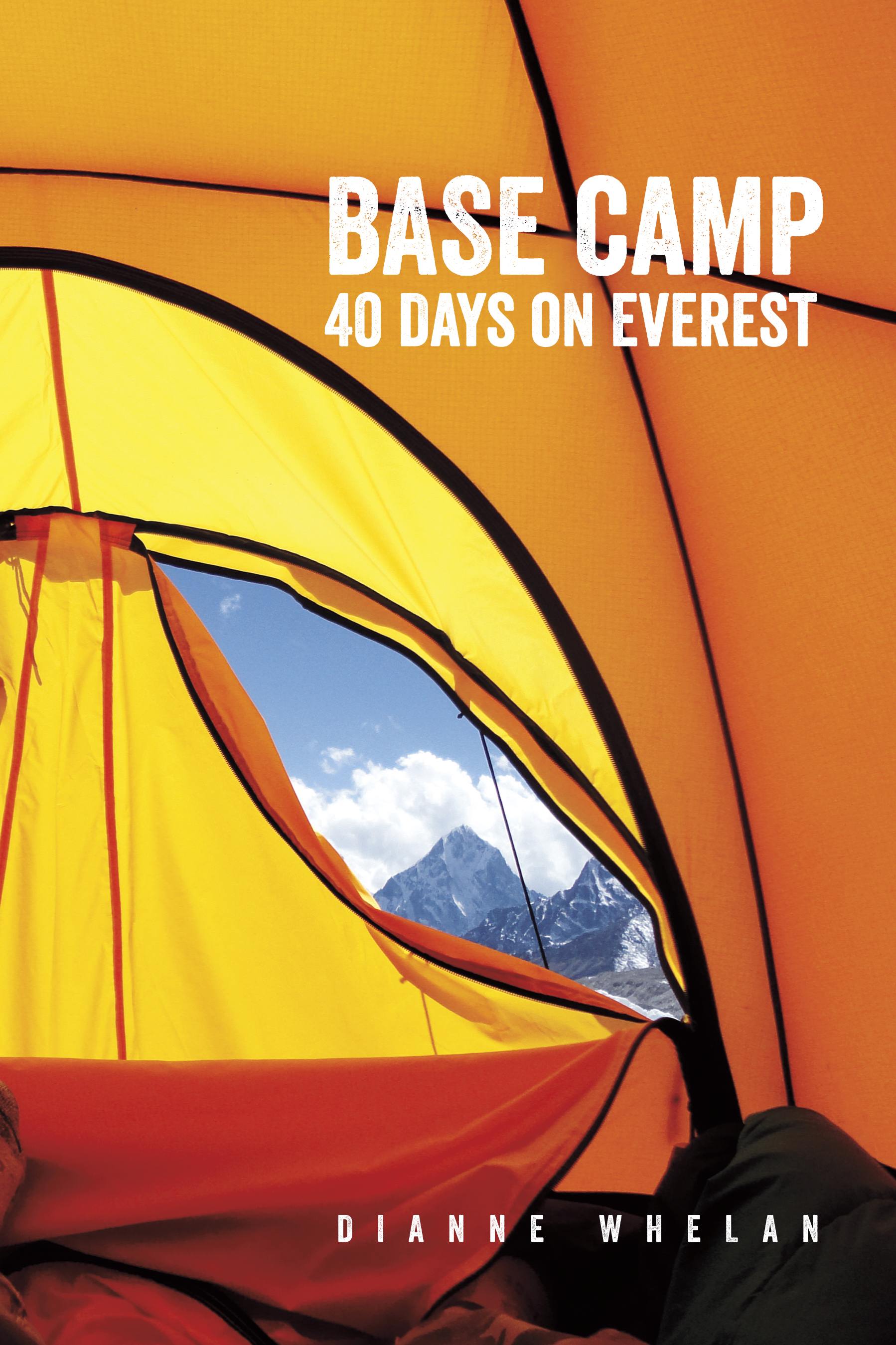
Base Camp 40 Days on Everest

BASE-CAMP-COVER-webI like Dianne Whelan.  She’s tough.  You’d want to be if you’re a lady documentary film maker with no sponsors, doing your thing as an independent, with a plan to spend 40 days below the shrinking Khumbu glacier at the world’s highest pile of rock, Mount Everest.

Actually it was only 37 days but by then 40 was just a number and meant nothing.  It was time to leave.

This is the book, just published, about the filming of the 88 minute documentary 40 Days at Base Camp released in 2012.  Both the book and the film are about Everest base camp in 2010.  I’ve yet to screen the film.  The book is first-rate which should be all you need to know about the film.

Dianne’s not a mountaineer but she’s written a book on the subject of mountaineering.  There aren’t that many around by Canadians although there’s no shortage of climbers in Canada and certainly no shortage of mountains.

It’s unfortunate that some of the greatest names in Canadian mountaineering are unknown outside the sport.  Is it a sport?  If you can call a taste for death-defying and occasionally death-dealing epics sport maybe it is.  But if you know what you’re doing it makes a difference.  I think of names like Patrick Morrow, Sharon Wood and Jim Haberl.  Ever heard of these people?  It’s a shame.

I’ve got a huge amount of experience as a mountaineer.  Armchair Expeditions Inc.  I owe a lot to the Vancouver Public Library (VPL) main branch.

I’ve rolled with Reinhold Messner on Nanga Parbat and was a microbe in his rucksack when he soloed Everest without the gas.  A really cold microbe.

I’ve  topped out on Aconcagua, slaughtered Changabang with Pete and Joe, shadowed John Roskelly on Nanda Devi.

I stood at Conrad Anker ‘s shoulder as he looked down at the body of George Mallory on the north face of Everest in 1999, nearly 75 years to the day after Mallory “disappeared”.  He didn’t disappear.  And he’s still on the north face.

I was on the nose of El Capitan with Warren Harding.  I was there with Sir Christian Bonington when he topped out on the rug-sized “roof of the world” at last.  It’s a lot of work.

We search for our goal, we mountaineers, and lots of us are dead but you can say that about any group. Doctors, architects, Formula 1 drivers, hummingbirds.  We’re fools, selfish bastards (and bitches) and conquistadors of the useless, as a wit put it.  Lionel Terray was his name.  So I had a lot of background on first looking into Base Camp.

The book’s basically a diary of Dianne’s stay below Everest while shooting the doc.  It was her second trip to the Everest region.  Base camp isn’t a nice place but it’s never stopped people from going there.  40,000 trekkers a year check it out.  They find there’s not enough air, too much garbage, nothing grows and too many bodies are oozing out of the glacier.

That’s the thing about Everest.  It’s a great place for antique bodies wearing old climbing gear.  The bodies don’t decompose because things are frozen all the time.  And it’s time, avalanches and the glacier that move them down the mountain.  Not all of them.  Not all 250, the current estimate of the body count on hard old Chomolungma.  But a few.

It’s not a new phenomena but the rate of dead old mountaineers revealing themselves to a new world out of the Khumbu has gone up in recent years due to climate change.  That must be the reason.

And change is one of the themes of this book.  Change not really for the better.  Dianne’s other theme is the commercialization to an unsound, dangerous degree of what happens on Everest.  She’s not the only person who’s written on that subject.

I was reminded of the story of Shriya Shah-Klorfine, May 2012.  CBC did a doc. about her.  Canadian, Nepalese by birth, she had a dream to get up Everest.  She did.  She had basically zero climbing experience.

She hired help out of Katmandu but got caught up in the usual stupidity anyway–a long line of too many people making for the summit.  She waited it out, made it to the top late, and died coming down.  Beyond exhaustion.  Out of gas.  It should never have happened.

It’s not like it’s the first time it happened to somebody.  Far from it.  She died because she really shouldn’t have been on the mountain.  Everest is not a joke.  I haven’t been there but I know that much.

BASE CAMP 40 DAYS ON EVEREST.  DIANNE WHELAN. CAITLIN PRESS 2014. 978-1-927575-43-7

I really like Dianne.  I’m looking forward to screening the doc.  It’s puzzling, though, why it’s an image of K2 through the tent door on the book’s cover.  That’s what it looks like.  It’s certainly not Everest.

Update June 26, 2014.  After further consultation the peak isn’t K2 either but one imaged by Dianne from her tent at Everest base camp.  Now I’m wondering what its name is.  May have to get up there and find out.