You know what? I wanted to include this image for the previous post. For reasons our data team has adopted as their pet project of the moment, I couldn’t load it. They’re looking into it. But how could they? They don’t exist. It happens too often.
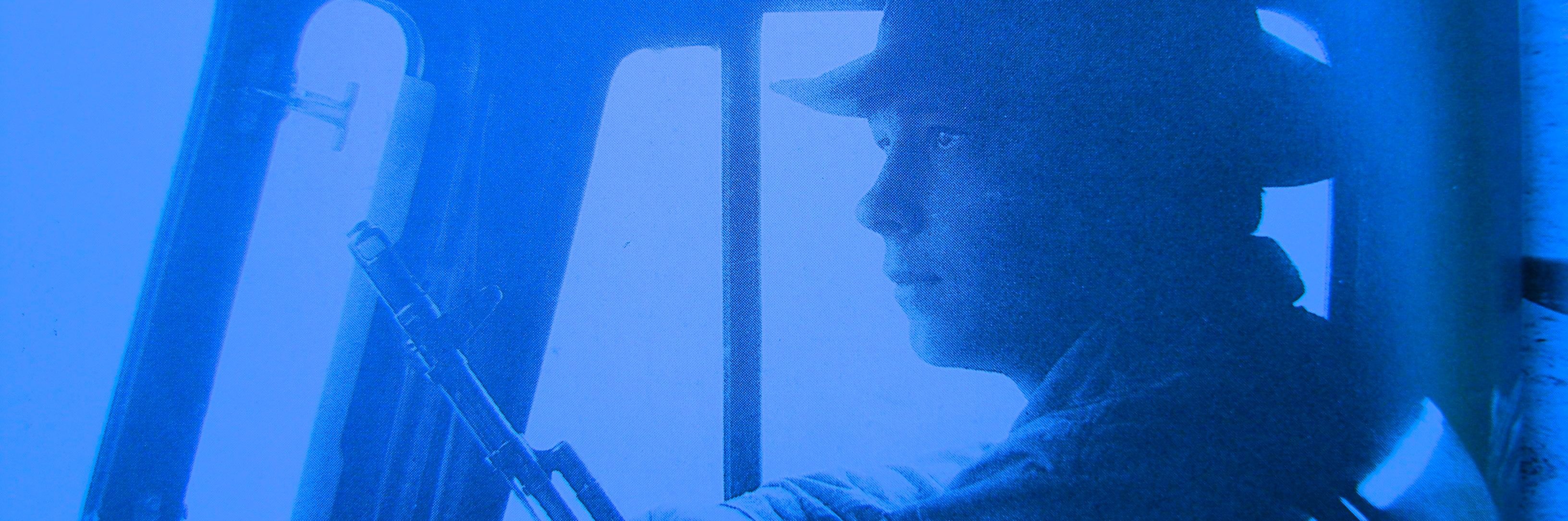
Am I gay or does Vladislav Tamarov remind you a bit of a young Brad Pitt? If Brad the Pitt was in a truck with guys with guns movie? Back then?
Vancouverluft. That’s right. That’s exactly what it is. The beneficent balmy wind. Good name for a band. It’s yours. You can have it. Vancouverluft could go down in history the same way Vancouverstrasse did. That was enormous.
We don’t experience our own, unique luft too often, but it’s been by the last couple of days and the little zephyrs are still around. The sound is incredible.
It’s the wind. It’s that airy light gusty presence, soft on the skin. It’s the breeze with no bight. It blew over the Delphiniums the other night and that’s probably not the worst it could do, but almost. It’s the kindness. It created a bit of a kefluffle I knew nothing about because I was asleep. Sorry? No. I needed the rest.
Vancouverluft. It’s funny about rare things. It kind of softens the brain and you think, “Oh, yeah. It’s like this all the time. Why I’s all bitchin about the rain? Ain’t none.”
It’s not exactly like that. What we’ve enjoyed here, and it’s mostly gone, is Vancouverluft at its spring-time best. That rumbustious, raucous caressing gusty breeze. It just doesn’t get any more adjectival. It’s great.
A great man. I hope it’s all good. There’s a Facebook page looking for donations to repatriate the gentleman’s body to his mother in Saint Petersburg, Russian Federation, from the state of Nevada, United States of America. I hope it’s legitimate. Vladislav Tamarov passed away last “Boxing Day”.
I wouldn’t know anything about that.
Saint Petersburg, as everyone recalls, was called “Leningrad” for a while. It’s where Vladislav Tamarov grew up.
Vladislav Tamarov wrote a great book. It’s not all that common, you know, to stumble across what you think is a “great” book. A book that after two readings 10 years apart is still a profound experience. See “Chakari Minaret” preceding this post. Go ahead.
It didn’t occur to me that Vladislav Tamarov could be dead. The news saddened me. I found this out doing research for an only vaguely related project about Afghanistan. Like a lot of veterans of any war he encountered difficulties after the shooting stopped.
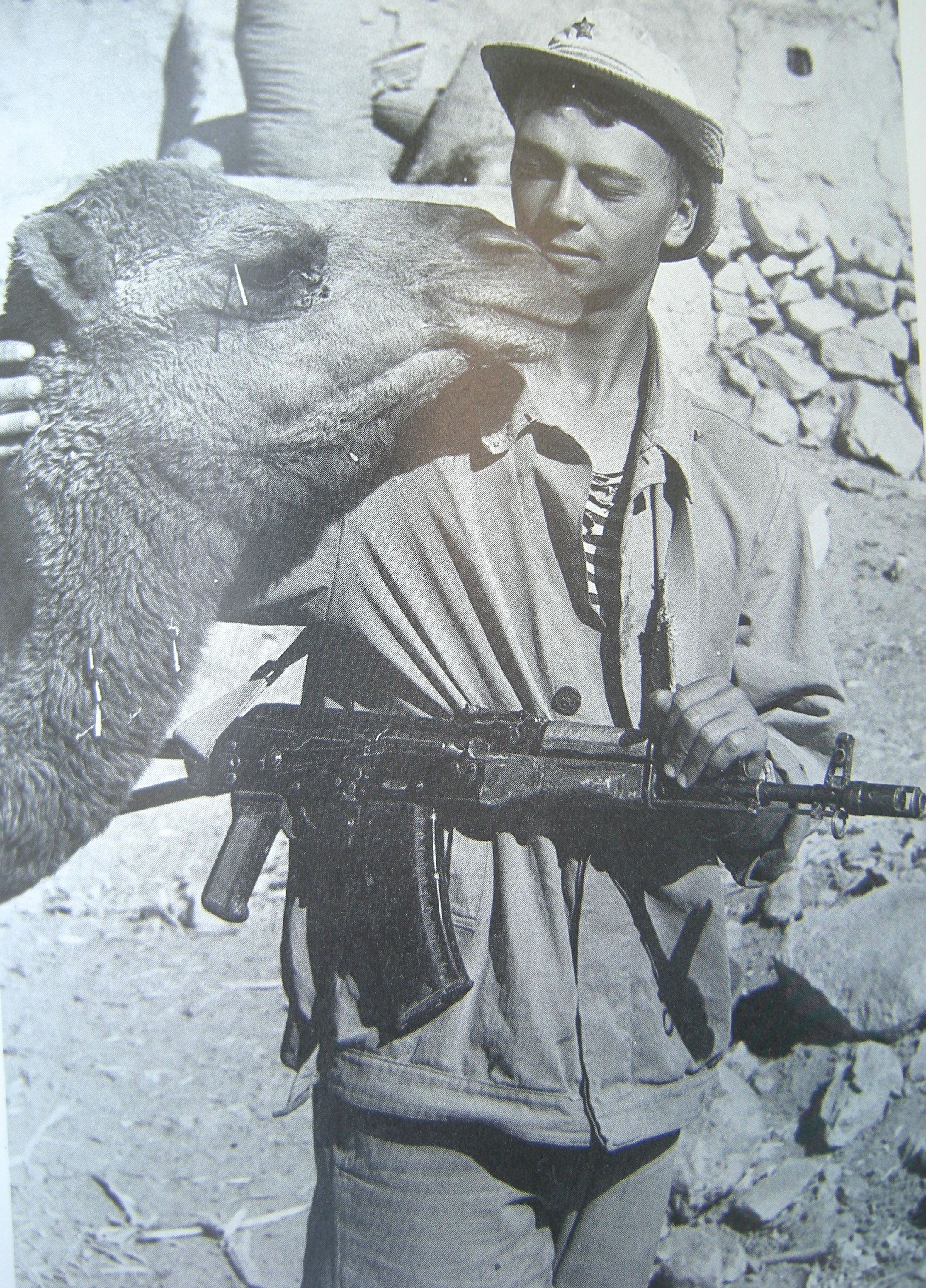
That rifle he’s got slung over his shoulder is an AK 74, a “modernized” version of the AK 47. There’s been at least a couple further modernizations since. At least that’s what I’ve read.
He emigrated to the United States and published the book these images are drawn from. Mercury Press, San Francisco 1992. He had no chance in the Russia of his youth publishing any portion of his book or his photographs. He spent five years putting the book together. The text is maybe 25,000 words. You can read it in an afternoon. It’s great.
Pagman, Afghanistan September 1985
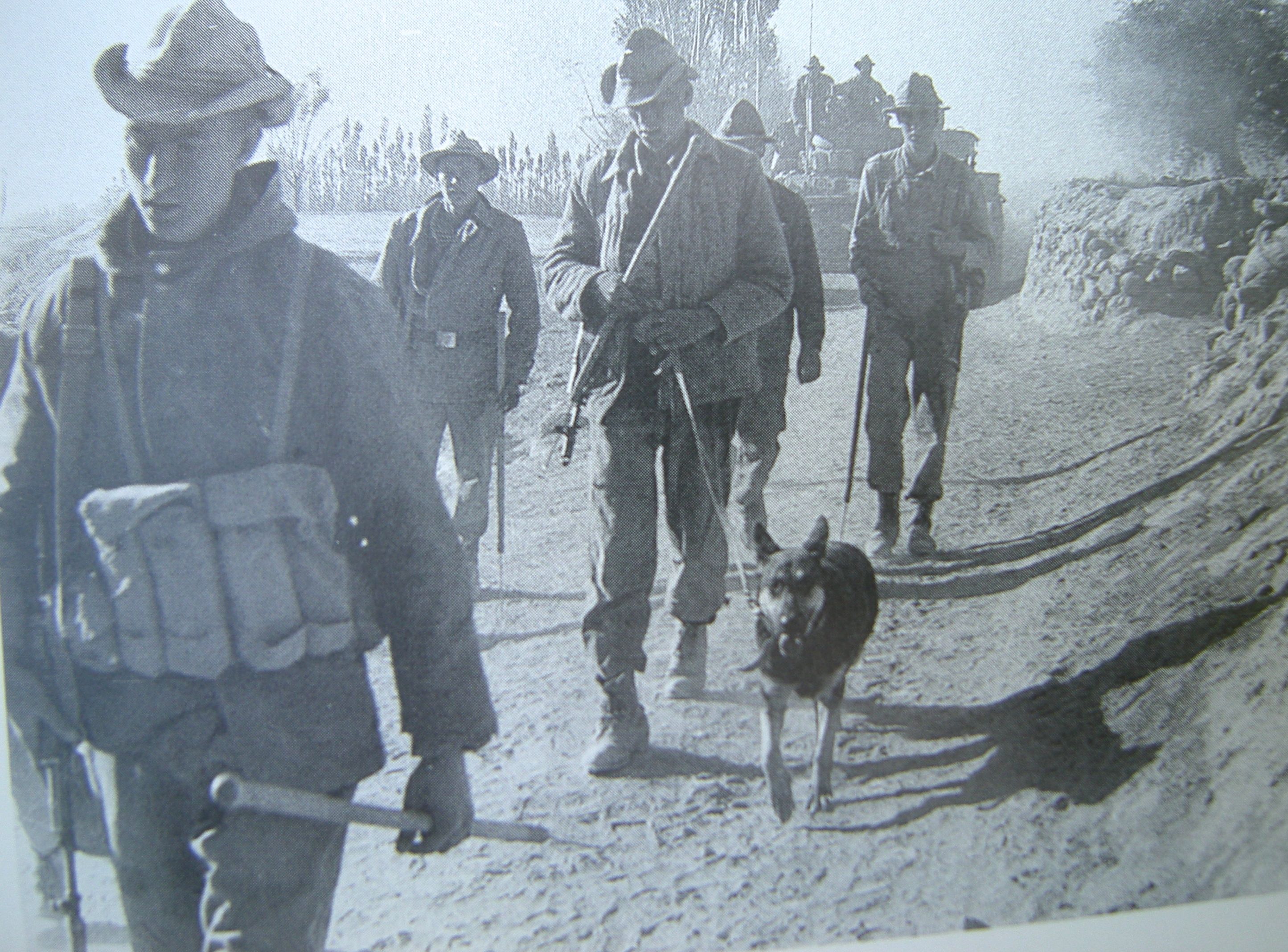
Vladislav Tamarov was a member of the 3rd regiment of the 103rd Airborne Division of the military of the USSR. His job morphed into becoming a minesweeper as there was no need for skytroopers in this particular Russian war. He spent most of his “tour” in the rugged, mountainous Panjsher or “Panjshir” region in northeastern Afghanistan.
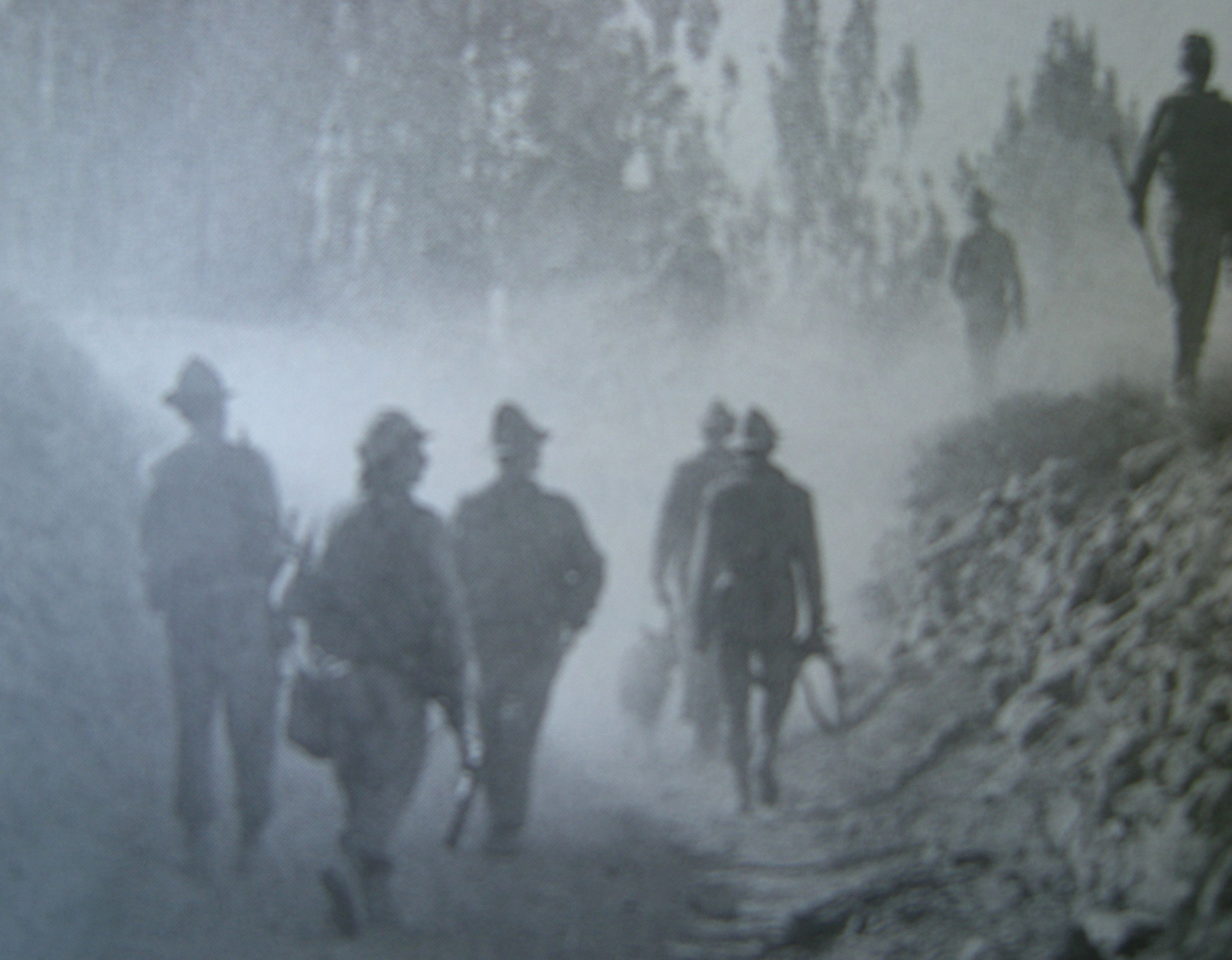
As you can see, these guys, unlike Nato soldiers of more recent Afghanistan slaughter and mayhem, wear no body armour or even helmets. A few in this outfit were issued pointy sticks to probe for mines the country was littered with. And still is. They humped it rough and were expendable. The official total for the ten years the Russians were in Afghanistan is 15,000 killed. Vladislav Tamarov says the real total was up to three times as many.
One thing that never changes about old Afghanistan, from everything I’ve seen, is the dust.
Afghanistan: Soviet Vietnam. Mercury Press, San Francisco, 1992. 1-56279-021-8
Afghanistan: A Russian Soldier’s Story. Ten Speed Press, Berkeley, 2001. 978-1-58008-416-1
You can be wrong. Oh wait. Did somebody just say something? You can be wrong, but when an author’s wrong and makes you wrong and you finally discover the error, even if it’s years later, it makes for interesting blogging, I can tell you that. Concatentation, anyone?
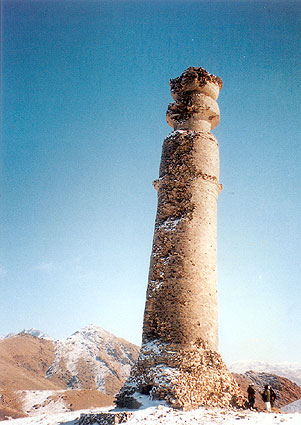
The “Minaret Chakari”. Or as I’m calling it here, the “Chakari Minaret”. Same thing. I don’t know anything about those little figures standing to the right, but they give you a sense of scale.
For years I thought this was a “column” built by Alexander the Great’s army on their triumphant murderous swath through ancient Afghanistan. 325 or so BC. I’m still using the “BC” dating probably because I’m from BC. ↑
You have to admit that as a “column” it’s somewhat phallic. At least in this image from this angle taken around 1991 or something, not long before it came down. And it’s actually not a “column”. Vladislav Tamarov. It’s all his fault.
Minaret Chakari 1983
← Here’s what it looked like in 1983 in Vladislav’s book. “The column was built by the troops of Alexander the Great many centuries ago.” And I believed it. I’d never heard of this thing before about 2005 looking into Mr. Tamarov’s book. But I was hooked.
I brought it in myself for re-sale. The book, that is. Ten Speed Press. It was a reprint. I didn’t realize that at the time. I was just fascinated by the book. And so, years later, in 2015, in connection with another project, I was gratified to see the book, one copy, which I very much wanted to have a look at again, was on the shelves at the Vancouver Public Library, Main Branch. I just want to make that clear. Things are confusing enough.
Those little figures at the bottom of the “tower” or “minaret” are Russian soldiers. Somehow, Vladislav Tamarov, who took the picture, got his facts wrong. The book, originally titled “Afghanistan: Soviet Vietnam” was published in San Francisco in 1992.
It’s full of very interesting black and white pictures of Vladislav Tamarov’s Russian Military unit in Afghanistan, a unit overwhelmingly made up of young men 18 – 20 years old, many of whom didn’t make it home. The text is an excellent translation. The book greatly impressed me in 2005 and it’s done it again this week in 2015.
Vladislav Tamarov couldn’t get his book published in his own country. I can understand how he felt about that. He emigrated to the United States. He flogged copies in San Francisco and on the streets of Manhattan, New York.
I was saddened to learn that Vladislav Tamarov died in Nevada on December 26, 2014. He was 49. He was an artist. “This massacre,” is how he referred to what was going on in the Afghanistan depicted in “Afghanistan: A Russian Soldier’s story”, the retitled reprint I read. The VPL’s copy I’ve been massaging the last few days is the original “Mercury House” edition.
I spent quite a bit of time trying to come up with data on the “column” by “troops of Alexander the Great” not far from Kabul. There was none and I wondered why. Finally I discovered that the “minaret” or “tower” or “column” or “pillar” was put up in the 1st century AD and is of Buddhist provenance. What does provenance mean? It means these were the people who built the thing. And so “minaret” isn’t exactly the right word either. At least not originally.
The Taliban attacked the “Minaret of Chakari” as part of their modernization plan for Afghanistan. It became a pile of rubble in 1998 having lasted a mere 2000 or so years.
I’m way over my word count and I hope I don’t get fired. I’ll be right back.



 samoyeddogs