Proust Remembered

Really going to the dogs around here.  I keep seeing fluffy white hounds but they don’t seem to see me so I’m hoping that’s a good thing.  Paranoia strikes deep.  So old school.  So old.  You can’t be concerned.  You just can’t.  You just have to get through the therapy.

Dying time again.  I keep tearing bits off the site before they try to grow back.  It’s slow, painstaking work and like all of you out there I hate pain.  “Take the pain!”  I wish I knew.

Even now, at this late moment, you remember the people that remembered you reading Proust although they can’t remember now because they’re dead.  I remember.  Too bad. Who cares?  Get out.  Bar’s closed.


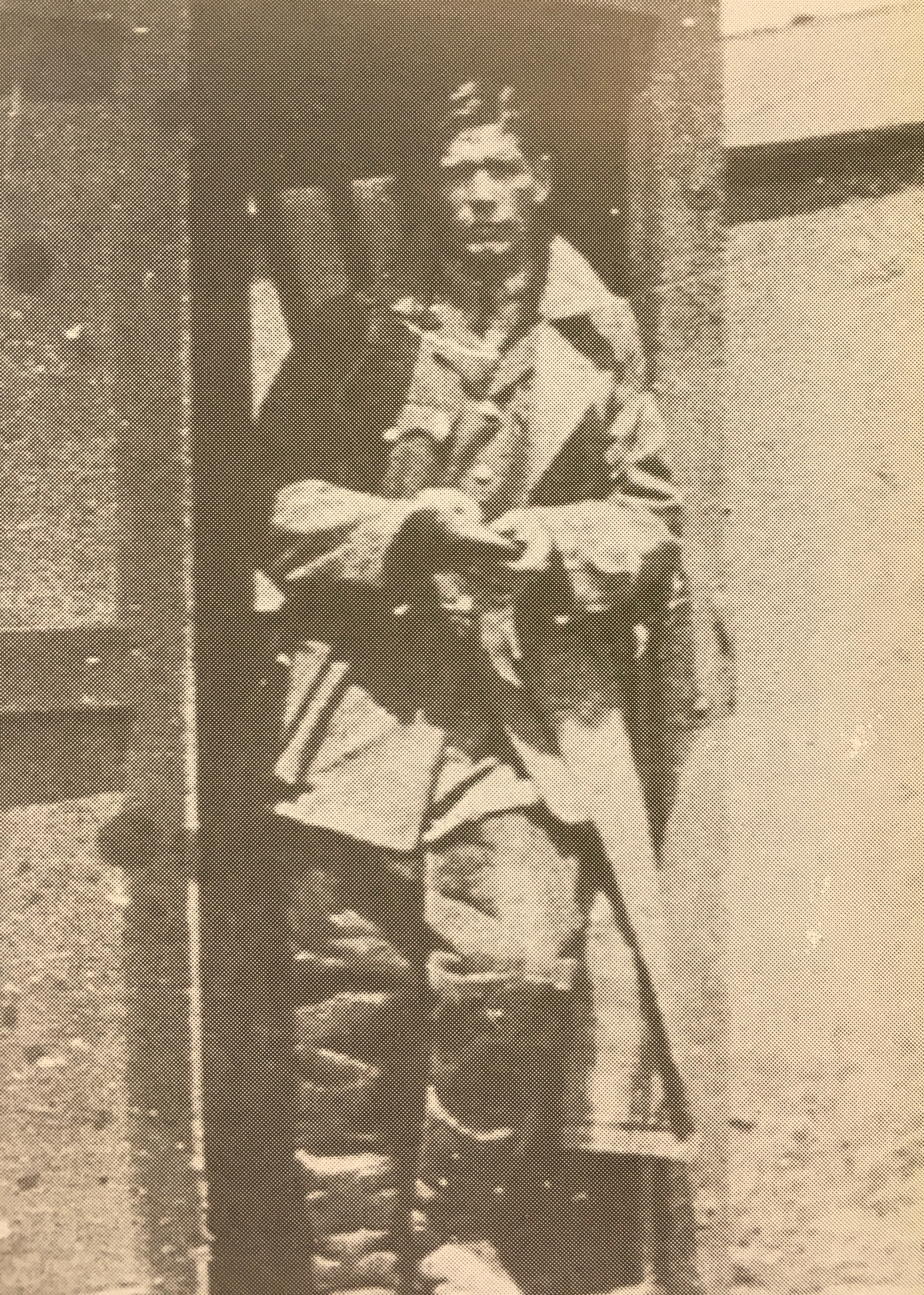
I wouldn’t have thought to think about it if I hadn’t.  Proust’s first English translator dressed up as a Scottish soldier.  What is this?  How’d he get permission?  For years I knew nothing about this.  I became concerned.  What else didn’t I know?  Royal Scots.  Great War.  Hundred years.  Zzzzz…  Time out.  Remember “quicksand”?  Sinking in quicksand? You never hear about quicksand anymore.  As a young lad I was terrified of quicksand. Never saw it, encountered it.  Saw it in movies and on TV.  Never heard about Scott Moncrieff either.

So I acquired this biography of the guy who translated À la recherche du temps perdu.  It had to happen at some point.  The  cover is the Farrar Strauss and Giroux edition, 2014. Great bunch of guys.

The Marcel Proust I read, for obscure reasons, was translated from the French by C. K. Scott Moncrieff.  It’s indisputable.  Who turns out to be rather an interesting character for a lot of reasons beside his translation of Marcel’s massive work of art.  Less on him later.

He was also a poet, although he didn’t think much of himself as one, an opinion shared by a smattering few, but others enjoyed it.

I read half the Proust translation in Chatto & Windus paperbacks published in London too many years ago because we don’t have all day.  Farrar, Strauss and Giroux take the field against Chatto & Windus.  That would be a match-up for the ages.  Luv to see that!

The poem prefaced one of the Chatto & Windus volumes.  As I sold off these volumes years ago at a trifling loss and am too lazy to check a library copy and anyway continue with a deep sense of revulsion for libraries generally, I can’t recall which volume it was exactly. Doesn’t matter.  The theme is remembrance.  I think it was the second volume.

How’s the ancient Greek mythology coming along?  Mine’s so-so.  You plant teeth from some dragon and warriors sprout up from the dirt.  Goes on from there.  Doesn’t make a lot of sense but there it is.

“Remembrance Day”. “Remembrance Sunday.” “Veteran’s Day”.    Some people are criticizing the thing saying it promotes war and killing.  All that’s happening there is these folks getting high on the rising tide of ignorance.  It’s either that or they’re communists. Pitiful.  We forgive them.


To K. S. S.

That men in armour may be born
With serpents’ teeth the field is sown;
Rains mould, winds bend, suns gild the corn
Too quickly ripe, too early mown

I scan the quivering heads, behold
The features, catch the whispered breath
Of friends long garnered in the cold
Unopening granaries of death,

Whose names in solemn cadence ring
Across my slow oblivious page.
Their friendship was a finer thing
Than fame, or wealth, or honoured age,

And—while you live and I—shall last
Its tale of seasons with us yet
Who cherish, in the undying past,
The men we never can forget.


There was probably a lot of women he never can forget but they were possibly not uppermost in his mind at the time.  Romantically, certainly, he preferred men.  Interesting guy.

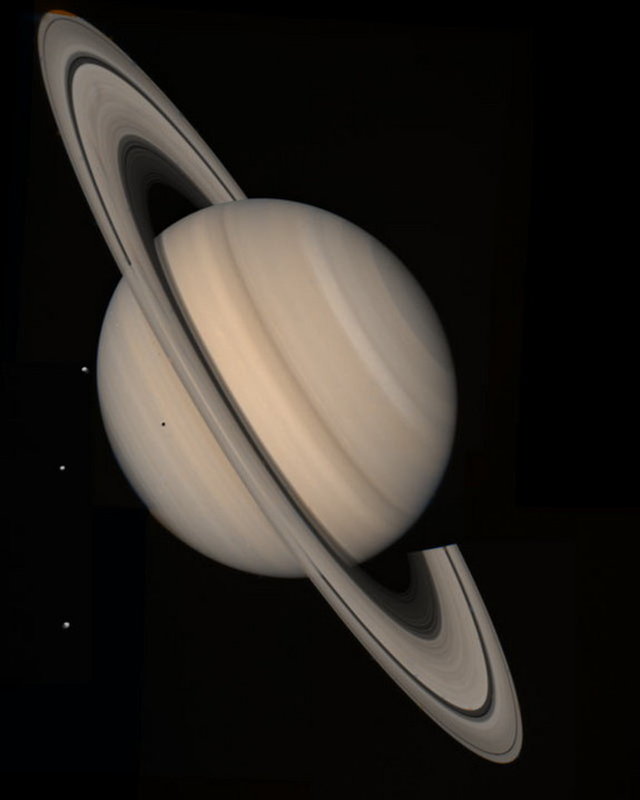
Do You Still Have That Place On Saturn?

Struck us as a good question. Somebody asked CSN at work. The answer was yes. You get wrapped up in Saturn. We do, and we’re hanging on to our place despite the cost. Despite the long commute. It can take years to get there depending on the conditions and the route you take, but we don’t care.  It’s worth it.

We like Saturn. It’s super quiet and usually there’s not a lot of people around if that’s what you want. There’s a lot of rain in the winter but that’s no surprise. It’s helium rain which makes your voice go kind of funny so that’ s different. Singing in the helium rain.  Meet you in the helium rain.

There’s a store on Saturn but it can take a long time to get anywhere on a massive gas giant so we don’t bother much. Some people find the lack of conveniences a bit inconvenient. We pack for a long vacation because there’s no choice. It can be tough to get the time off but we work it out.

We wouldn’t dream of selling Saturn. Even if we wanted to buyers can be hard to find. A lot of people don’t like the travel and it’s true, the price of fuel and transportation have gone way up the last few years. Some people talk about building a bridge but that’ll never happen. It’d be too expensive.

Saturn courtesy NASA

This shot was taken just as we were coming in Tuesday night.  We were finally getting back to our old Saturn home.

Always a lot of dusting and cobwebbing to do first getting in.  That’s okay because once you’re here time kind of stretches out.  No big rush to get on with your projects if you don’t especially feel like it right away.  A year on Saturn’s nearly 30 years long.  You can waste time like anything and still have plenty left.  People on Saturn tend to be in for the long haul. It comes with the territory.  We’re fine with that.

NASA


Mad Micky Packs It July 26

Nobody called him that.  “Mad”.  Except my father-in-law whose mother, Amelia, was Edward “Mick” Mannock’s cousin.  “Micky” yes, but surely not “mad”.  I was re-reading ole father-in-law’s autobiography after 20 years, one of 37 books he published, and I didn’t recall him calling him that from the first read-through so it stuck out.  Everything’s twenty years.

Major Mannock 1918

But today, July 26, 1918, it’s “Major Mannock”.  But it’s still good ole “Mick” to friends unless they’re dead.  Dreary stuff, Eleanor.  I seem to have taken over 85 squadron at St. Omer, France.  Why would anyone want to do a thing like that?

It’s all getting a bit vieux chapeau, Gertrude.  Stupid war.  All this bloody killing. 1918 and we’re still bloody going at it. I’ve had it.

I’m not sure why a “Major.”  What else have I been wrong about?  He was too modest.  Staff sergeant Milliby said: “If you’ve been gazetted a major, Major, then you’re bloody well a major.”  So that’s the reason why.


Mick didn’t take a course in killing German airmen in WWI.  He was self-taught.  He killed with a ferocious efficiency.  Early on at 40 Sqd. returning from a patrol the right wing on his plane fell off at 700 feet.  Rather than die he managed to crash land.  After that nobody wanted to talk about how Mannock didn’t know what he was doing.

Gentlemen, always above, seldom on the same level; never underneath.”

And don’t follow your kill down.  You can get shot up from the ground.  Especially true for Mannock because he always attacked from the east and his combats were always over German-held ground.  He was the top “Ace” of the Great War.


I have my own theory about what happened to Mick Mannock that cheerful July morning over the lines under low cloudcover at five am.   After those two bastard enemies in the German flying contraption were killed.  The Kiwi, Inglis, was in on it.

“Both my guns were going full out, when suddenly the Hun’s tail shot up in front of me.  A chill ran through me as I pulled up, just missing his tail and wing by a fraction.  Looking back I saw my first Hun going down in a mass of flames.”


The Blue Flame

It was a special trip because the squadron usually didn’t open much before 8 a.m.  But Inglis needed a first Hun and the major, who by now wasn’t just a legend in his own mind but a greatly respected leader and teacher, and, sine qua non, survivor, wanted to help the Hun-less flyer out. Of course he did.

“We circled once and started for home.  The realization came to me we were being shot at from the ground when I saw the major stop kicking his rudder.  Suddenly a small flame appeared on the right of Mick’s machine, and simultaneously he stopped kicking his rudder.  The plane went into a slow right-hand turn, the flame growing in intensity, and as the machine hit the ground it burst into a mass of flame.”

“I saw no one leave the machine and then started for the lines, climbing slightly and at about 150 feet there was a bang and I was smothered in petrol, my engine cut out so I switched off and made a landing 5 yards behind our front line.”

Nice Pants

That’s not Mick, of course.  He’s dead even if it is only five-thirty in the morning.  That’s the after action report of Inglis, who’d come all the way from the southern hemisphere to give battle, but hadn’t killed anybody before this morning.

It’s quite evident.  It’s never been precisely determined where the Germans buried the major’s body. It’s another one of those things that happened 100 years ago.  Birth, death, it’s all the same.  If things had gone a bit different, and Major M. had got through this morning, he could still be alive.


Quotes from “MANNOCK The Life and Death of Major Edward Mannock VC, DSO, MC, RAF.  By Norman Franks and Andy Saunders. Published 2008.