Base Camp 40 Days on Everest

BASE-CAMP-COVER-webI like Dianne Whelan.  She’s tough.  You’d want to be if you’re a lady documentary film maker with no sponsors, doing your thing as an independent, with a plan to spend 40 days below the shrinking Khumbu glacier at the world’s highest pile of rock, Mount Everest.

Actually it was only 37 days but by then 40 was just a number and meant nothing.  It was time to leave.

This is the book, just published, about the filming of the 88 minute documentary 40 Days at Base Camp released in 2012.  Both the book and the film are about Everest base camp in 2010.  I’ve yet to screen the film.  The book is first-rate which should be all you need to know about the film.

Dianne’s not a mountaineer but she’s written a book on the subject of mountaineering.  There aren’t that many around by Canadians although there’s no shortage of climbers in Canada and certainly no shortage of mountains.

It’s unfortunate that some of the greatest names in Canadian mountaineering are unknown outside the sport.  Is it a sport?  If you can call a taste for death-defying and occasionally death-dealing epics sport maybe it is.  But if you know what you’re doing it makes a difference.  I think of names like Patrick Morrow, Sharon Wood and Jim Haberl.  Ever heard of these people?  It’s a shame.

I’ve got a huge amount of experience as a mountaineer.  Armchair Expeditions Inc.  I owe a lot to the Vancouver Public Library (VPL) main branch.

I’ve rolled with Reinhold Messner on Nanga Parbat and was a microbe in his rucksack when he soloed Everest without the gas.  A really cold microbe.

I’ve  topped out on Aconcagua, slaughtered Changabang with Pete and Joe, shadowed John Roskelly on Nanda Devi.

I stood at Conrad Anker ‘s shoulder as he looked down at the body of George Mallory on the north face of Everest in 1999, nearly 75 years to the day after Mallory “disappeared”.  He didn’t disappear.  And he’s still on the north face.

I was on the nose of El Capitan with Warren Harding.  I was there with Sir Christian Bonington when he topped out on the rug-sized “roof of the world” at last.  It’s a lot of work.

We search for our goal, we mountaineers, and lots of us are dead but you can say that about any group. Doctors, architects, Formula 1 drivers, hummingbirds.  We’re fools, selfish bastards (and bitches) and conquistadors of the useless, as a wit put it.  Lionel Terray was his name.  So I had a lot of background on first looking into Base Camp.

The book’s basically a diary of Dianne’s stay below Everest while shooting the doc.  It was her second trip to the Everest region.  Base camp isn’t a nice place but it’s never stopped people from going there.  40,000 trekkers a year check it out.  They find there’s not enough air, too much garbage, nothing grows and too many bodies are oozing out of the glacier.

That’s the thing about Everest.  It’s a great place for antique bodies wearing old climbing gear.  The bodies don’t decompose because things are frozen all the time.  And it’s time, avalanches and the glacier that move them down the mountain.  Not all of them.  Not all 250, the current estimate of the body count on hard old Chomolungma.  But a few.

It’s not a new phenomena but the rate of dead old mountaineers revealing themselves to a new world out of the Khumbu has gone up in recent years due to climate change.  That must be the reason.

And change is one of the themes of this book.  Change not really for the better.  Dianne’s other theme is the commercialization to an unsound, dangerous degree of what happens on Everest.  She’s not the only person who’s written on that subject.

I was reminded of the story of Shriya Shah-Klorfine, May 2012.  CBC did a doc. about her.  Canadian, Nepalese by birth, she had a dream to get up Everest.  She did.  She had basically zero climbing experience.

She hired help out of Katmandu but got caught up in the usual stupidity anyway–a long line of too many people making for the summit.  She waited it out, made it to the top late, and died coming down.  Beyond exhaustion.  Out of gas.  It should never have happened.

It’s not like it’s the first time it happened to somebody.  Far from it.  She died because she really shouldn’t have been on the mountain.  Everest is not a joke.  I haven’t been there but I know that much.

BASE CAMP 40 DAYS ON EVEREST.  DIANNE WHELAN. CAITLIN PRESS 2014. 978-1-927575-43-7

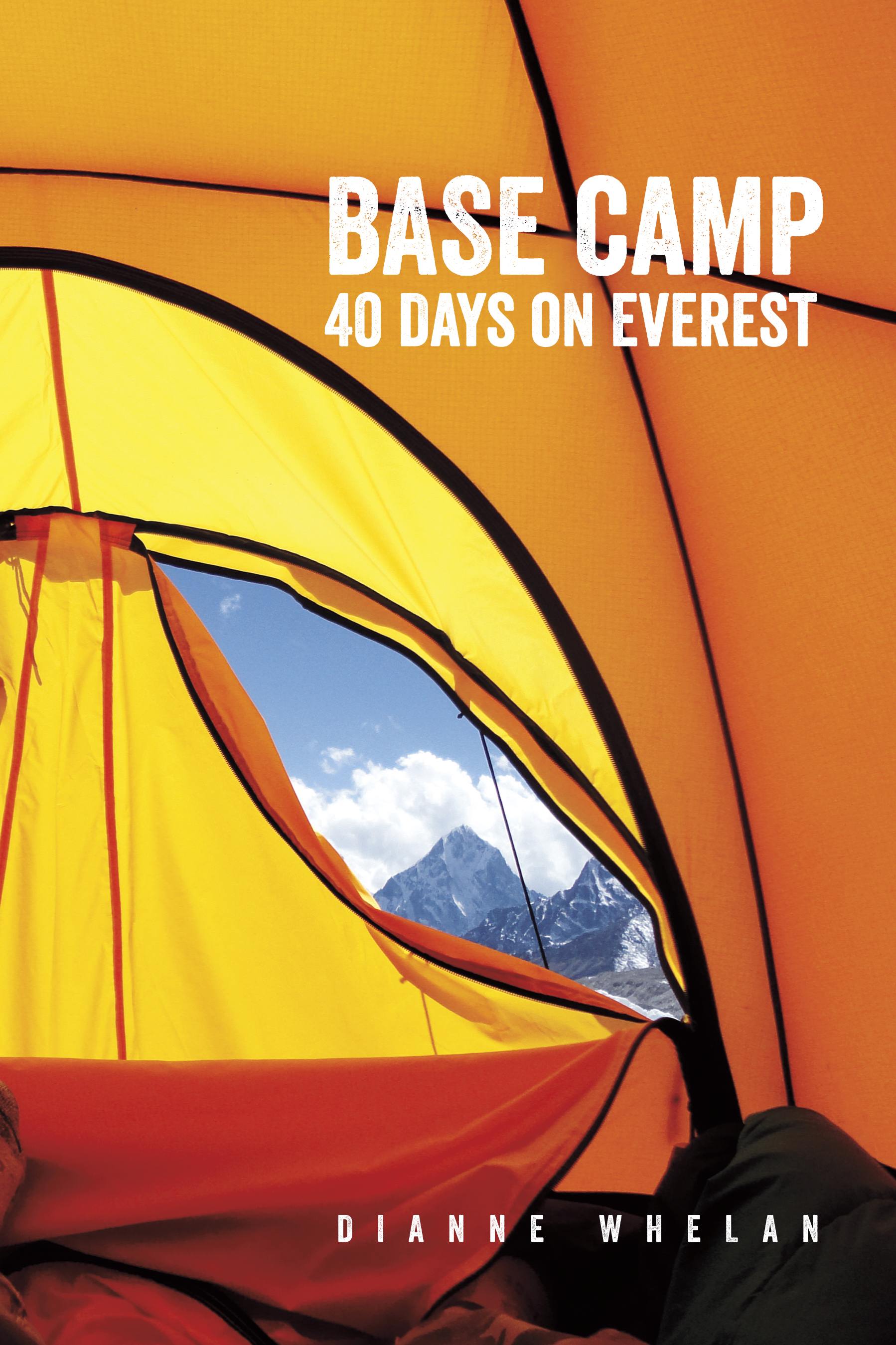
I really like Dianne.  I’m looking forward to screening the doc.  It’s puzzling, though, why it’s an image of K2 through the tent door on the book’s cover.  That’s what it looks like.  It’s certainly not Everest.

Update June 26, 2014.  After further consultation the peak isn’t K2 either but one imaged by Dianne from her tent at Everest base camp.  Now I’m wondering what its name is.  May have to get up there and find out.


‘Steven Brown’

Art by Tami Thirlwell
Flowers Courtesy Tami Thirlwell

It’s taken a while to break me down but I have to confess I’m not the person you think I am.  You know, I’ve never actually known who ‘Steven Brown’ is?  I’m serious.  Okay, not that serious.  But have you ever wondered who you are?  Of course not.  Okay, this post is over.

If you’re born with a name, and grow up with it, and it’s you, that’s different from being one person then becoming someone else, especially if you were already a bit confused as to who you might be.  I know.  Again.  So what?

My one question is does it move the dial?  Will it start the car?  I know.  That’s two questions.

I was stunned myself when I actually, finally, put everything aside and started to look into ‘Steven Brown’.  There’s a lot of this guy out there.  I knew that but was afraid to look because I’m, you know, unique.  I was dumbfounded, appalled, bewildered.  I nearly rolled over and went back to sleep.

The guy is everywhere.  Sometimes it’s ‘Steve’, sometimes, ‘Stephen’, occasionally ‘Stephan’ or ‘Stefan’, and always ‘Brown’.  Brown.  What’s that mean, anyway?  What’s ‘Steven Brown’ mean?  It’s worrisome.  It’s on every land mass, this thing, this ‘Steven Brown’.  And it seems to hold down a vast array of occupations.  Doctor.  Lawyer.  Musician.  Academic.  Top commenter.  That’s not an occupation.  Shut up.  Try it.

It’s just strange.  It’s unavoidable.  It’s banal.  And it’s not my fault.  ‘Steven’ is my christian name.  Are they still called that?  ‘Brown’ is my adoptive name.  I didn’t adopt it.  Somebody adopted it for me.  So it’s always in the back of your mind, right?  Are you sure?  Are you sure that’s you?  Who are you, actually?  And what happens when you find out?  Not that you ever will.

It’s like having the last name ‘Smith’.  I always thought, because I was told, it’s the commonest name, but I only ever knew one Smith and that was years and years ago.  You never meet a Smith.  Forget it.  If the name’s so common where are they all?  If you know a Smith let me know because I’m here to tell you Smith is not a common name.  Brown is a common name, much more common.  Unless it’s Wong.  It’s funny because Stephen Wong was a good guy, but where is he?  And as for ‘Steven Brown’ it’s off the dial.  The dial’s broken.

It’s just a solemn fact there’s a lot of us out there.  There’s not much I can do.  I could change my name.  But why bother?  It didn’t work the first time either (see above).

But even people with unusual names, they’re not alone.  You can have a strange name like Punxsutawney or Thirlwell and feel you’re in the clear but when you look into it discover you’re well back, you’re not first and not even tenth or maybe twentieth.  It’s frustrating.

I just remembered something.  I knew another Smith and it wasn’t that long ago.  Andrea.  Nice kid.  Worked with her, sort of.  I think she changed her name.

Olympic Mtn AlpenglowThat’s it.

The Jesus Store

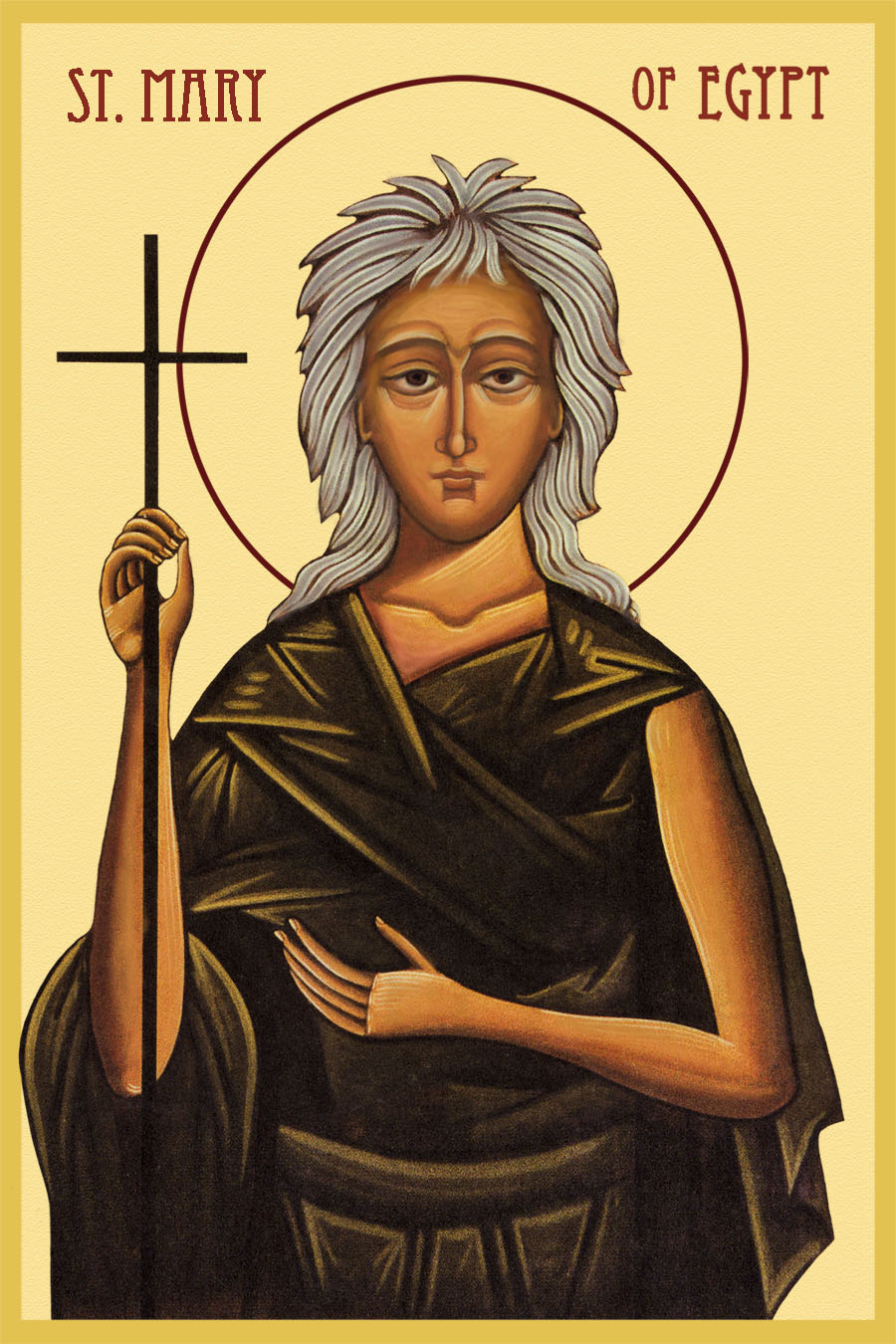
Saint Mary of Egypt

How come I didn’t know about this? Scant blocks from here is a very well-endowed Christianity emporium that has obviously been around for years and I didn’t have a clue. I thought I’d have to send away for my statue of St. Mary of Egypt but here it is right here and in more than one size.  Or if I wanted an icon of St. Mary of Egypt to hang on my wall here it is, or a pendant to go around my thickening neck.  Pendants of every Saint you ever heard of and dozens and dozens of Saints you never heard of.  Right here.  In a tall spinner rack and all along half a wall and this is only the beginning.

Vestments?  You want vestments?  Get ’em here.  Racks and racks of vestments.  Books.  Paintings.  Censers.  Votive lights.  Images of the big guy, long, flowing locks, handsome tanned white face alive with niceness, with beatitude.  You know what?  Jesus Christ may not have looked like a bad actor movie star.  Has anyone considered?  Don’t matter.  As for crucifixes?  One stop shopping.

We saw a votive light we liked but it had no price tag on it.  We took it to the counter.  A small silent women wearing a blue smock took the thing and went back to a corralled-off office area and sat at a desk and computer screen for about ten minutes trying to track the thing down.  Finally she returns.  “Six dollars.”  We think it too much and choose one a little smaller for $2.50.  It’s a nice dark blue glass votive burner.  They may be called tea-light burners or holders elsewhere, but around here they’re called votives.  Remember that.

We’re out of tea-lights.  In fact it’s the reason we’re here.  We usually buy them at Ikea in Richmond but since the strike out there haven’t been going and we’re out.  We’re kinda romantic and like the mood set by a few tea-lights burning of an evening.  They sell them here.  Unlike the ones sold at Ikea these come from the U.S.A. and are about four times as expensive as the Ikea-ers.  Everything in here is pricey.  Is that because churches have lots of money?  Could be a connection.  We’re not here to criticize but to observe and hopefully to learn.

The music is weird.  Not loud, but weird.  It’s coming from a CD player near the point-of-sale.  Sounds like choral hymns but then the choir breaks into a stirring rendition of the Star Spangled Banner.  Seems a tad incongruent.

Saint Mary of Egypt.  I met her before.  Patron saint of penitents.  That’s you and me.  We mess up and we’re sorry and promise to do better next time.  She banished herself to the desert and lived a life of extreme asceticism in atonement for what she considered her misspent youth.  This was back when the years only had three numbers to them.  She survived exclusively on what she could find out there in the sand, which wasn’t much.  I don’t know.  Somehow I identified with that.  But our take away today is a votive and box of 100 tea-lights.  $30.