Mick Mannock Veteran Page

tumblr_m55yqg24zS1rvtdi7o1_500How many relatives can you name that could play the “Londonderry Air” on a mess hall violin, and also by his own hand shoot down 73 enemy aircraft from April, 1917 to July, 1918 over France and Belgium, and be remembered as the greatest flying “Ace” of the “Great War”?  That’s right. Big question mark.

There’s only one.  Edward “Mick” Mannock V.C., D.S.O. (2 bars), M.C. (1 bar).  What’s all that mean?  Victoria Cross (posthumous). Distinguished Service Order.  Military Cross.  And hitting a few bars along the way.

Mick Mannock was of Irish and British decent.  We don’t seek famous warrior ancestors-by-marriage, but if we should stumble upon them then famous warrior ancestors-by-marriage it is.  Mick Mannock was my consort’s first cousin, twice removed.  That means he was a cousin of her father’s mother.  Grandmother’s maiden name, as they used to be called, was Amelia Camille Mannock.
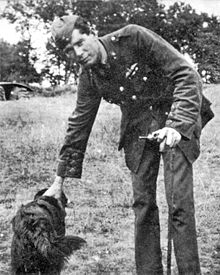
Nice Doggy
Nice Doggy

Getting up there in the air a hundred years ago and flying around in these canvas, string, wire and dope contraptions and their antiquated mechanics and avionics, and doing what the great Mick and many others did, is an incredible story.

Here’s a few excerpts from a personal diary Mick Mannock kept from April to September, 1917.

“20 April 1917.  Over the lines today on Parry’s bus.  Engine cut out three times.  Wind up.  Now I can understand what a tremendous strain to the nervous system active service flying is.”

“3 May 1917.  Six of the boys did a great ‘stunt’ yesterday morning.  Unluckily, I was not on that duty.  They went over ours and the German lines at twenty feet all out, strafed five balloons and returned safely with all machines shot to pieces.”

“7 June 1917.  The push on Armentiere-Ypres sector commenced this morning.  We escorted FE’s over Lille on bomb-dropping business–and we met Huns.  My man gave me an easy mark.  I was only ten yards away from him–on top so I couldn’t miss!  A beautifully coloured insect he was–red, blue, green and yellow.  I let him have sixty rounds at that range, so there wasn’t much left of him.  I saw him go spinning and slipping down from fourteen thousand.  Rough luck, but it’s war, and they’re Huns.”

“20 July 1917.  Had the good fortune to bring a Hun two-seater down in our lines a few days ago.  Luckily my first few shots killed the pilot and wounded the observer (a Captain) besides breaking his gun.  The bus crashed south of Avion.  I hurried out at the first opportunity and found the observer being tended by the local M.O. and I gathered a few souvenirs, although the infantry had the first pick.  The machine was completely smashed, and rather interesting also was the little black and tan terrier–dead–in the observer’s seat.  I felt exactly like a murderer.”

“19 August 1917.  Almost a month since my last notes.  Pure laziness.  Things have happened.  Plenty of scrapping in the air, and much glory.  Brought my ninth Hun down yesterday morning.”

“5 September 1917.  His nose went down (pointing at me) and I immediately whipped round, dived and ‘zoomed’ up behind him, before you could say ‘Knife’.  He tried to turn, but he was much too slow for the Nieuport.  I got in about fifty rounds in short bursts whilst on the turn, and he went down in flames, pieces of wing and tail, etc.”

War means fighting.  Fighting means killing.  Killing means dying.  It’s an amazingly consistent theorem throughout the sorry history of warfare.
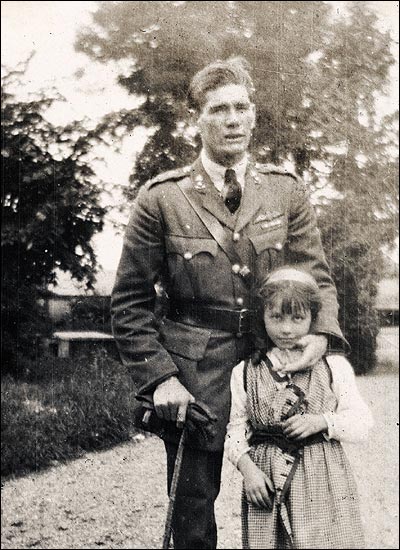
Last Photo of Mick Mannock

It was the 26th of July, 1918.  Mick Mannock had returned to France having been promoted to Major and was commanding 85 squadron whose previous top was Billy Bishop, the Canadian.  Mannock, at 31, was ancient by Royal Flying Corps standards.  He was also burned out.  By modern measures there’s no way he’d still have been flying much less commanding a squadron.

He’d destroyed a German plane before 6 am that morning.  Then he did something inexplicable and that he’d repeatedly warned other pilots never to do, which is to go down and have a closer look at the plane you’ve just shot down.  A hail of ground fire from the German trenches struck his SE.5a.  A wing came off and Mannock crashed.  His body was recovered by the Germans and immediately buried.  It’s uncertain even now where exactly his grave is.

Five biographies have been written about Mick Mannock from the scholarly to the merely anecdotal.  samoyeddogs, through the offices of our hard working research staff, has managed to acquire them all as well as a copy of his personal diary published in 1966.  Peace.

SE5a_3_vues


Robert Semrau Veteran Page

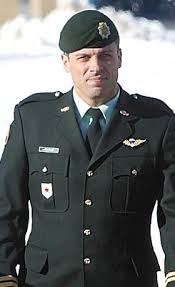
It was Captain Robert Semrau, Royal Canadian Regiment (RCR), until October 5, 2010 images-1when a military court pronounced Robert Semrau guilty of disgraceful conduct and dismissed him from the Canadian Army.  A lot of people thought it should never have happened.

On October 19, 2008 Robert Semrau was leading a small mentoring team of Canadian soldiers embedded with an Afghan National Army unit in Helmand province, Afghanistan.

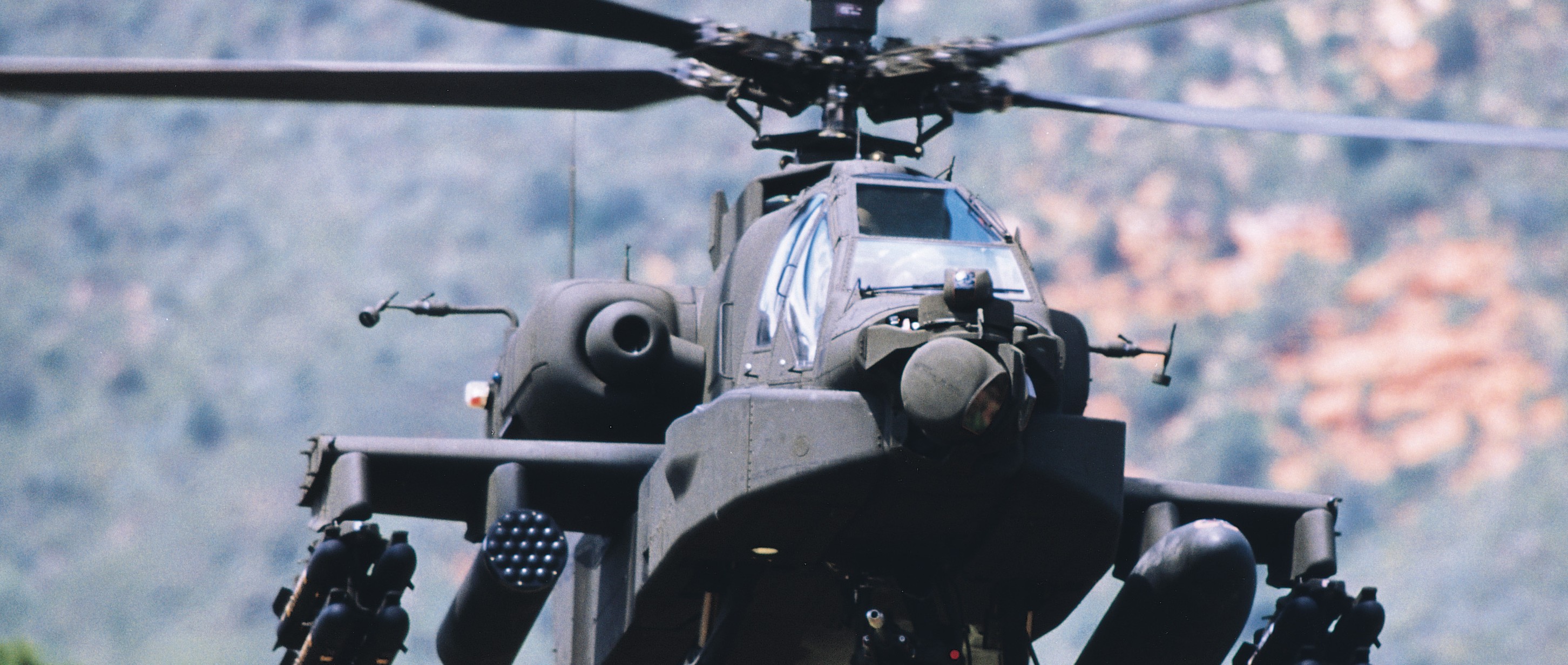
A Taliban ambush was winding down and a U.S. Army Apache 64 Longbow attack helicopter, just because it could, had laid down some 30 mm chain gun rounds in the area, ruining the afternoon of at least one Taliban who was blown out of a tree.  He was lying on the ground absent his intestines and with compound fractures in both legs.  He was still alive but the prognosis was not good.

Robert Semrau has never spoken publicly about his actions concerning the grievously wounded Talib but what has never been in dispute is that he put two rounds into him where he lay on the ground.  To finish him off?  To put him out of his misery?  The exact motivation has never been explained.  Maybe it can never be explained.

d.0051

It took two months but it was determined that Captain Semrau had violated the Canadian military Code of Conduct and he was arrested and returned to Canada to be tried for murder.  That had never happened before to any member of the Canadian armed forces in any war zone in any war in the history of the Canadian armed forces.

Robert Semrau was fond of soldiering.  He’d done a stint with the British Army’s 2nd Parachute Battalion and had served in Afghanistan with the British Army before serving there with the Canadian Army.  He was an army guy.  One of the most interesting things about him from the vantage point of samoyeddogs is that he wrote a brilliant book about his experiences with the RCR called “The Taliban Don’t Wave”.

It’s a good title because they don’t.  Or didn’t.  And probably still don’t.  And that’s how Semrau and his team were often able to determine who was friendly and who was foe out there in all those poppy and marijuana fields.  The non-combatant farmers and country folk will return your wave but the Taliban don’t wave.

imagesRobert Semrau was cleared on the murder charge and avoided a prison sentence but he was still drummed out of the army.  On the face of it, yes, it was a mistake to shoot.  Stress.  The situation.  The condition of the dying person on the ground.  Whatever led to it, Robert Semrau’s action was plainly against the rules.

The Taliban don’t play by the rules but the NATO allies in Operation Enduring Freedom did, or tried to.  I don’t think Mr. Semrau was naive, but he must have known somewhere in his thought processes that there could, and likely would be consequences for what happened that day.  It was all just going to be too bad.

Robert Semrau is alive and with his family and he’s been quoted as saying that is the most significant thing he has taken away from his experiences in the army and in Afghanistan.  He doesn’t much get into the events of October 19, 2008 in his book.  Perhaps there’ll be a time when he’s willing to share his side.  I’m sure it would be interesting.

The Taliban Don’t Wave  978-1118261-187   John Wiley & Sons  2012

Images courtesy the photographers


In The Hall of The Tojo King

The restaurant is big. 6500 square feet I read somewhere. You only get a feeling for the size when you’re inside because from the street, even though there are windows, you just can’t really see what’s going on at Tojo’s. But you wonder. You always wonder because you remember when you essayed his first location four blocks east of here.  What’s the new place like?  Wondering that for about 15 years.  And it was time for change.

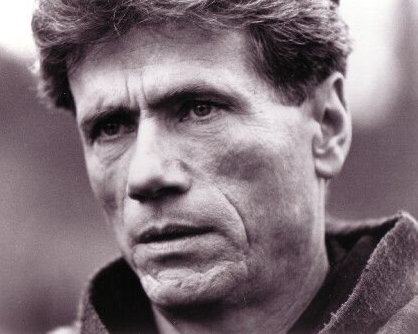
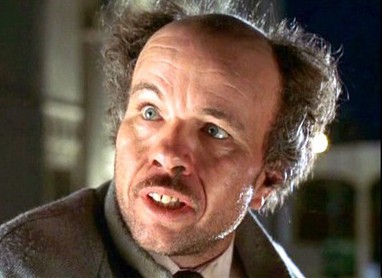
Even then, meaning 15 years ago, the place had a rep as a place movie stars might be found. That wasn’t why we went there, we went because of the excellent reputation for food, but sure enough, that other evening States and I rode up in the elevator to the second floor location with Jürgen Prochnow and Clint Howard.  Just the four of us.  What timing.

jrgen-prochnow002OHW_Clint_Howard_009


They were making a picture somewhere locally.  They didn’t talk to us and we didn’t talk to them.  It was like a remake of “The Elevator People”.  Dead silence except for the ticking elevator.  We’ve all been through this.  Plus you’re in Canada so absolute reticence is natural.

Always remembered the Pacific oysters in an exquisite sort of creamy sauce that we started out with that night.  Jürgen and Clint were sitting close by at another table for two.  We didn’t talk to them or make eye-contact and I was relieved because if there’s one thing I can’t stand it’s movie stars bugging me when I’m trying to enjoy a restaurant meal.

In truth, Jürgen was and is the movie star.  Clint is more of a supporting or character actor.  The astounding thing is I never knew until yesterday he’s the younger brother of Ron Howard.  Get out.  The “Gentle Ben” kid is Opie’s brother?  Everybody knows that.  The movie he and Jürgen made back then, well, let’s just say you never heard of it.  It definitely wasn’t Das Boot II.

That restaurant was about a tenth the size of this one.  It was intimate and fairly noisy.  You can hear things in this place, but they sound kind of far off.  Susurrations of distant Japanese staff.  There’s a second floor mezzanine dining area accessed by a rather long staircase and there’s no chance of seeing what’s going on up there.  Mr. Hidekazu Tojo spent a mint on this place.  I say hall because the main dining area is two stories tall.  Look way up.

The furnishings are good but there is sort of this Brobdingnabian feel at odds with all of my prior experience of Japanese restaurants.  And the lighting seems a bit off.  And although Pacific oysters in that cool sauce was still on the menu the dish wasn’t available tonight.  We both teared up and sipped our Asahi.  How’s this thing going to go?  Can the past be recaptured?  Le temps retrouvé?  Chuck, you got something for us here?

Truth is three of the dishes were first-rate and two, the tempura and fatty tuna, were so-so.  “So-so” isn’t, by the way, a Japanese expression.  I believe it originated in Ontario.

IMAG0792Which is not to say we didn’t have a good time.  We did.  And we were in no danger of any movie star harassing us.  There were none.  Amal and George Clooney and entourage may have been up there on the mezzanine but if they were, they behaved themselves.

$195 and change including a 15% gratuity.  Why not?  The nice, semi-elderly Japanese lady server in traditional semi-elderly Japanese lady server garb, or maybe not, found out it was somebody’s birthday tonight and, need we explain further, two gratted deserts arrived followed by a miniature sing-a-long.  Not quite “The Keg”, but reminiscent.

Mr. Tojo is looking well.  Tojo is expensive?  Yes. Overly?  Yes.  But that “Golden Roll” with the super-thin crêpe wrap…  “Tojo’s Tuna”, which we appetized on, was excellent and half the price of the fatty tuna entreé.  That’s enough French for now.

Actor images courtesy the photographers