Proust Remembered

Really going to the dogs around here.  I keep seeing fluffy white hounds but they don’t seem to see me so I’m hoping that’s a good thing.  Paranoia strikes deep.  So old school.  So old.  You can’t be concerned.  You just can’t.  You just have to get through the therapy.

Dying time again.  I keep tearing bits off the site before they try to grow back.  It’s slow, painstaking work and like all of you out there I hate pain.  “Take the pain!”  I wish I knew.

Even now, at this late moment, you remember the people that remembered you reading Proust although they can’t remember now because they’re dead.  I remember.  Too bad. Who cares?  Get out.  Bar’s closed.


I wouldn’t have thought to think about it if I hadn’t.  Proust’s first English translator dressed up as a Scottish soldier.  What is this?  How’d he get permission?  For years I knew nothing about this.  I became concerned.  What else didn’t I know?  Royal Scots.  Great War.  Hundred years.  Zzzzz…  Time out.  Remember “quicksand”?  Sinking in quicksand? You never hear about quicksand anymore.  As a young lad I was terrified of quicksand. Never saw it, encountered it.  Saw it in movies and on TV.  Never heard about Scott Moncrieff either.

So I acquired this biography of the guy who translated À la recherche du temps perdu.  It had to happen at some point.  The  cover is the Farrar Strauss and Giroux edition, 2014. Great bunch of guys.

The Marcel Proust I read, for obscure reasons, was translated from the French by C. K. Scott Moncrieff.  It’s indisputable.  Who turns out to be rather an interesting character for a lot of reasons beside his translation of Marcel’s massive work of art.  Less on him later.

He was also a poet, although he didn’t think much of himself as one, an opinion shared by a smattering few, but others enjoyed it.

I read half the Proust translation in Chatto & Windus paperbacks published in London too many years ago because we don’t have all day.  Farrar, Strauss and Giroux take the field against Chatto & Windus.  That would be a match-up for the ages.  Luv to see that!

The poem prefaced one of the Chatto & Windus volumes.  As I sold off these volumes years ago at a trifling loss and am too lazy to check a library copy and anyway continue with a deep sense of revulsion for libraries generally, I can’t recall which volume it was exactly. Doesn’t matter.  The theme is remembrance.  I think it was the second volume.

How’s the ancient Greek mythology coming along?  Mine’s so-so.  You plant teeth from some dragon and warriors sprout up from the dirt.  Goes on from there.  Doesn’t make a lot of sense but there it is.

“Remembrance Day”. “Remembrance Sunday.” “Veteran’s Day”.    Some people are criticizing the thing saying it promotes war and killing.  All that’s happening there is these folks getting high on the rising tide of ignorance.  It’s either that or they’re communists. Pitiful.  We forgive them.


To K. S. S.

That men in armour may be born
With serpents’ teeth the field is sown;
Rains mould, winds bend, suns gild the corn
Too quickly ripe, too early mown

I scan the quivering heads, behold
The features, catch the whispered breath
Of friends long garnered in the cold
Unopening granaries of death,

Whose names in solemn cadence ring
Across my slow oblivious page.
Their friendship was a finer thing
Than fame, or wealth, or honoured age,

And—while you live and I—shall last
Its tale of seasons with us yet
Who cherish, in the undying past,
The men we never can forget.


There was probably a lot of women he never can forget but they were possibly not uppermost in his mind at the time.  Romantically, certainly, he preferred men.  Interesting guy.

Do You Still Have That Place On Saturn?

Struck us as a good question. Somebody asked CSN at work. The answer was yes. You get wrapped up in Saturn. We do, and we’re hanging on to our place despite the cost. Despite the long commute. It can take years to get there depending on the conditions and the route you take, but we don’t care.  It’s worth it.

We like Saturn. It’s super quiet and usually there’s not a lot of people around if that’s what you want. There’s a lot of rain in the winter but that’s no surprise. It’s helium rain which makes your voice go kind of funny so that’ s different. Singing in the helium rain.  Meet you in the helium rain.

There’s a store on Saturn but it can take a long time to get anywhere on a massive gas giant so we don’t bother much. Some people find the lack of conveniences a bit inconvenient. We pack for a long vacation because there’s no choice. It can be tough to get the time off but we work it out.

We wouldn’t dream of selling Saturn. Even if we wanted to buyers can be hard to find. A lot of people don’t like the travel and it’s true, the price of fuel and transportation have gone way up the last few years. Some people talk about building a bridge but that’ll never happen. It’d be too expensive.

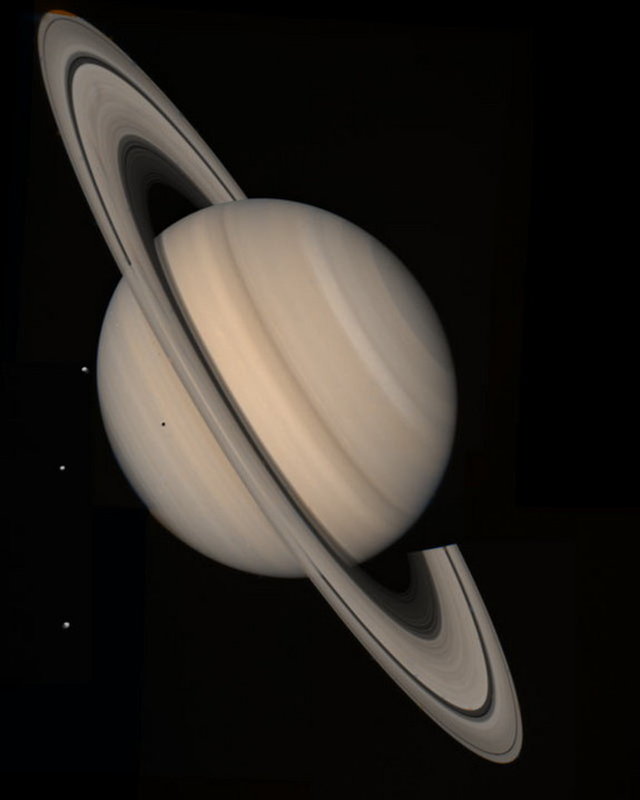
Saturn courtesy NASA

This shot was taken just as we were coming in Tuesday night.  We were finally getting back to our old Saturn home.

Always a lot of dusting and cobwebbing to do first getting in.  That’s okay because once you’re here time kind of stretches out.  No big rush to get on with your projects if you don’t especially feel like it right away.  A year on Saturn’s nearly 30 years long.  You can waste time like anything and still have plenty left.  People on Saturn tend to be in for the long haul. It comes with the territory.  We’re fine with that.

NASA


Long Walk to Freedom -The Autobiography of Nelson Mandela

“This is the land where the Pharaoh died”. Madiba didn’t come from ancient Egypt. He grew up at the other end of the continent in the 1920s, born July 18, 1918.  Xhosa children. Advertising makes it taste better.

He was Xhosa nation, Thembu tribe, Madiba clan.  Zulu.  We are all Zulu.  Those that know me, and who have stayed with me on the long walk, sometime address me as “Madiba” although my name is “Nelson Mandela”.

His father named him Rolihlahla, but you can’t even get a driver’s license.  A grade school teacher laid “Nelson” on the boy, and that’s when everything changed.  He’d never been Nelson before.  What did it mean?


Suddenly you’re 16 and it’s ritual and it’s a crazy guy with an assegai, the short stabbing spear with the flat, double-edged blade.  Hi crazy guy!  It’s Transkei Saturday night. “Ndiyindoda!”

“Which we were trained to say in the moment of circumcision.  Seconds later, I heard Justice’s strangled cry pronounce the same phrase.  There were now two boys before the ingcibi reached me, and my mind must have gone blank because before I knew it the old man was kneeling in front of me.  I looked directly into his eyes. He was pale, and though the day was cold, he was shining with perspiration.  His hands moved so fast they seemed to be controlled by an otherworldly force.  Without a word, he took my foreskin, pulled it forward, and then, in a single motion, brought down his assegai.”


Twenty-eight years later.  You’re forty-four years old.  You’re in the prime of life and doing great.  You’ve been at it a while.  You’re a professional.  You have one of the strangest jobs in South Africa, lawyering in a lawless land and sure, why not, you’re a second class citizen, not even a citizen at all really, some sort of weird puppet in the fantasy camp of apartheid and it builds up and you don’t like it. You’ve been making your way and there’s no shortage of people looking for justice.

Suddenly you’re jailed and you stay jailed for twenty-seven years (1963 – 1990).  The charge is treason.  When you’re let out you’re 71.

This is one of the toughest things to understand in this book, this autobiography.  How did Nelson Mandela maintain his composure through twenty-seven years of jail?


Strength of character. Determination. Unity. Discipline. Somehow these virtues don’t adequately explain it. They sound like clichés, but it’s the slow drip of resistance. Madiba knew the law, which confounded his jailers and those who gave them their orders. And towards the end even he, Nelson Mandela, knew the time had come for armed struggle.

International support helped. You couldn’t buy South African brandy or wine or helicopters or anything else for a long time. No rutabagas or plantains. No barber razor. The white guys were going crazy because they just couldn’t fix it. Stuttering in their paranoia. They burned his house down in his absence.

“I was tense about seeing Mr. Botha. He was known as die Groot Krokodil–the Great Crocodile–and I had heard many accounts of his ferocious temper. He seemed to me to be the very model of the old-fashioned, stiff-necked, stubborn Afrikaner who did not so much discuss matters with black leaders as dictate to them.”

A month later Botha resigned.  F.W. deKlerk, the last apartheid president, took over. Inside of five years the first one-person-one-vote elections were held. After more than three hundred years minority rule ended. The new National Assembly elected as its first leader—Nelson Mandela.  Mark Twain was right. Truth is stranger than fiction. I thought that was Confucius but I was wrong.  What else have I been wrong about?

None of it meant everything was suddenly solved in South Africa.  It still hasn’t been. Friends who were in Johannesburg recently mentioned armed guards in the restaurant where they dined one night. You know, to be on the safe side. But that’s no reflection on what Madiba achieved.

Nelson Mandela lived to 95. Long Walk to Freedom was published in 1994. It hasn’t lost anything.